
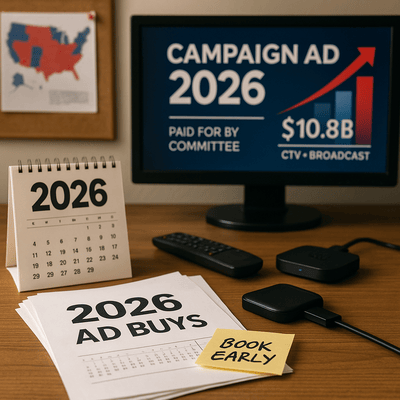
Political Ad Spending Poised to Shatter Midterm Records in 2026 — What It Means for Local Media and Agencies
Political ad spending is projected to reach $10.8 billion in 2026, making it the most expensive midterm cycle in U.S. history. Broadcast TV will still capture nearly half of this spending, but Connected TV (CTV) will surge to $2.5 billion, reshaping campaign strategies and demanding integrated media solutions. Swing states like California, Michigan, Texas, Georgia, and North Carolina will see the heaviest demand, with inventory scarcity and premium pricing affecting both political and non-political advertisers. Early buying is already breaking records, meaning agencies and local reps must help clients secure placements well in advance. For local media and agencies, the opportunity lies in balancing short-term political windfalls with long-term client relationships through cross-platform strategies and consultative selling.

The Death of Size as Competitive Advantage: How Small Agencies Can Beat Big Players
Artificial intelligence and programmatic advertising platforms are dismantling traditional competitive advantages of large agencies by democratizing access to sophisticated tools once exclusive to major players. Boutique agencies are leveraging this technological leveling to outperform larger competitors through specialized expertise and faster decision-making, with some achieving better performance metrics than multinational networks. Specialization allows smaller firms to command premium pricing while delivering personalized service and direct access to senior strategists. Speed has become critical, as boutique agencies pivot strategies within hours compared to weeks of approval processes at larger firms. The trend strongly favors agile specialists who combine technological fluency with deep domain expertise and exceptional client relationships.

Holiday Tightrope: Consumers Pull Back as Gen Z Leads a Spending Slowdown
Consumers are tightening their wallets this holiday season, with overall spending projected to decline 5% from 2024—the first drop since 2020. Gen Z is pulling back the most, slashing budgets by 23% after last year’s surge, signaling how quickly sentiment can shift. A compressed holiday calendar means nearly 80% of budgets will be spent by Cyber Monday, putting urgency on front-loaded campaigns. Value is the dominant theme, with shoppers gravitating toward discounts, gift cards, and practical purchases, while tariffs and economic uncertainty further dampen confidence. For local media reps and agencies, the opportunity lies in helping clients pivot messaging toward affordability, convenience, and community trust to capture cautious but still motivated holiday shoppers.

Retail Therapy Is Real—And It’s a Signal Local Media Sales Reps Shouldn’t Ignore
Retail therapy—the act of shopping to improve mood—is a scientifically supported behavior that offers emotional relief by restoring a sense of control, especially during times of sadness or stress. Research shows that the process of choosing and browsing, not just purchasing, triggers dopamine and serotonin, making consumers more receptive to emotionally resonant advertising. Local businesses, with their in-person experiences and human touch, are uniquely positioned to benefit from this behavior, especially when their ads emphasize comfort, self-care, and personal connection. For media sales reps, this presents a strategic opportunity to guide clients toward emotionally intelligent messaging and contextual ad placements. When done responsibly, advertising that aligns with retail therapy can drive results while supporting consumer well-being.

The LinkedIn Frequency Formula: What Local Media and Agencies Can Learn from Social Media's Sweet Spot
New research analyzing over 2 million LinkedIn posts reveals that posting 2-5 times weekly delivers +1,182 more impressions per post, with even greater benefits at higher frequencies, providing local media account executives and agency professionals a proven framework for building industry authority and generating leads. The frequency benefits apply regardless of account size, meaning local professionals see the same relative performance improvements as large accounts, while carousel posts generate 278% more engagement than videos. The research parallels traditional media principles where consistent presence builds cumulative brand recognition, giving media AEs concrete evidence for discussing frequency benefits with clients while building their own professional brands. For agency professionals competing on thought leadership, sustained LinkedIn presence creates compounding advantages in new business development, client retention, and talent acquisition that translate directly to revenue growth.

How Advertising Built a Legal Empire in Small-Town Minnesota
Bradshaw Bryant, a small-town Minnesota injury law firm, achieved market dominance by allocating 70% of its marketing budget to radio advertising, tripling their practice size in the first year and achieving 28% unaided brand awareness—133% higher than their nearest competitor. The firm's success demonstrates that traditional media's focus on long-term brand building creates sustainable competitive advantages that digital advertising's short-term conversion focus cannot replicate. This case provides a strategic blueprint for all traditional media—newspapers, television, outdoor advertising, and magazines—to demonstrate their continued value by emphasizing consistent exposure and trusted environments over digital platforms' fragmented attention. The success challenges Madison Avenue's digital-first approach and proves that "being known before you're needed" through patient, traditional media investment remains a powerful driver of long-term business growth.
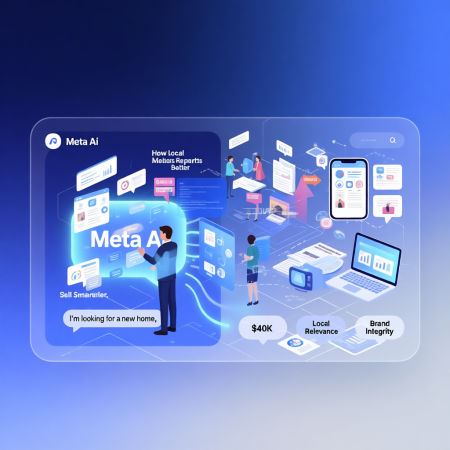
How Local Media Sales Reps Can Use AI to Sell Smarter, Faster, and Better
Artificial Intelligence is transforming local media sales by enhancing—not replacing—the human touch, allowing reps to prospect smarter, understand clients more deeply, and optimize campaigns in real time. By integrating AI tools into their workflow, reps can automate routine tasks, personalize content, and build stronger relationships with clients. A step-by-step guide helps reps begin with one tool, experiment, and scale thoughtfully, while a curated resource section offers tools and platforms for learning and growth. Looking ahead, trends like voice AI, predictive seasonal modeling, and AI-generated commercials will reshape how local media connects with audiences. Ultimately, AI empowers reps to become strategic artisans—blending data and empathy to sell with integrity and impact.
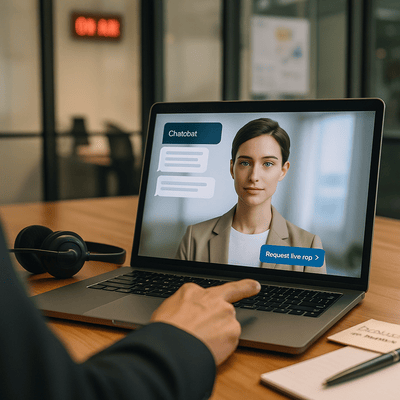
Chatbots in Media Sales: The Promise, the Practice, and the Pitfalls
Chatbots are AI-powered tools that simulate human conversation and are and will be increasingly used in media sales to automate lead generation, campaign planning, and customer support. Companies like Sephora, H M, and regional newspapers have successfully deployed chatbots to improve engagement and streamline ad operations. The benefits include 24/7 availability, scalability, and data collection, but drawbacks such as poor user experience, limited understanding, and brand risk remain significant. Experts emphasize the importance of using chatbots strategically, with clear escalation paths and human oversight. Ultimately, chatbots are best used as productivity enhancers—not replacements for authentic, human-driven media relationships.
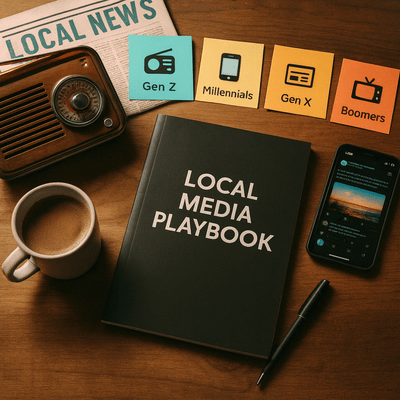
Selling in a Fragmented Media World: Why Local Media Still Wins Across Generations
In a fragmented media landscape, local media—including print, newspapers, radio, and digital—remains a trusted and effective tool across all age groups. Gen Z prefers mobile and social formats, Millennials engage with hybrid print-digital content, Gen X values cross-platform consistency, and Boomers rely heavily on traditional media. Print newspapers continue to deliver strong engagement, especially among older audiences, and are increasingly integrated with digital platforms to reach younger readers. Trust and credibility are key drivers of advertising impact, with local media outperforming national outlets in perceived reliability and community relevance. For media sales professionals and ad agencies, tailoring campaigns by age while leveraging the trust advantage of local media is essential for success.

The Emails That Miss the Point: Why Human Communication Still Wins in the Age of AI
AI can write emails and summarize meetings, but it cannot detect emotional nuance, disengagement, or the subtle signals that require human leadership. Strong communication—not automation—is what drives productivity, trust, and team cohesion, especially in high-touch industries like media and advertising. For local media sales reps and ad agency professionals, relying too heavily on AI risks weakening client relationships and team dynamics that depend on empathy, accountability, and real conversation. Smart leaders use AI to support their work—but they lead through human connection, not machine-generated messages.
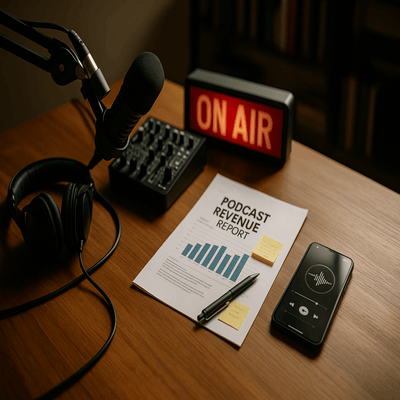
From Fringe to Frontline: Podcasting’s Rise to New Revenue Path for Local Media and Agencies
Podcast advertising continues to outperform expectations, with Nielsen data showing strong lifts in brand awareness, purchase intent, and consumer engagement across nearly 2,000 case studies. Host-read ads are especially effective, with listeners rating podcast hosts as likeable, credible, and relatable—making brand endorsements feel authentic and trustworthy. The medium commands 19% of daily ad-supported audio time among U.S. adults, with even higher engagement among younger and Hispanic audiences. Local media companies, sales reps, and ad agencies can capitalize on this trend by launching community-focused podcasts and offering host-read ad packages to regional advertisers. As podcasting grows, it offers local professionals a powerful new channel for storytelling, brand building, and audience connection.
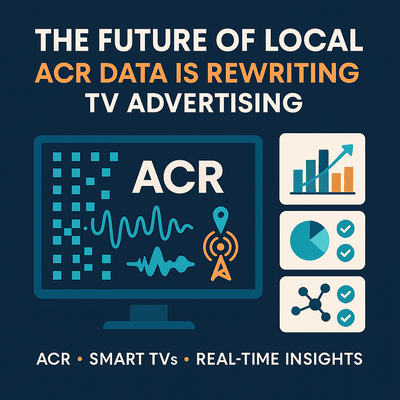
The Future of Local: How Data Is Rewriting the Story of TV Advertising
Automatic Content Recognition (ACR) is a technology embedded in smart TVs that identifies what content viewers are watching—across broadcast, cable, and streaming—by matching pixel or audio samples to a vast content database. This allows advertisers and local media reps to move beyond traditional ratings and gain precise, real-time insights into audience behavior and engagement. ACR empowers local advertising to evolve from broad media buying to data-driven strategy, enabling more targeted, measurable, and effective campaigns. It also democratizes access to advanced analytics, giving small businesses the same tools as national brands. As Keith Kazerman of Locality notes, “ACR allows us to truly understand the engagement that audiences are having across every screen,” marking a new era of precision and partnership in local media.
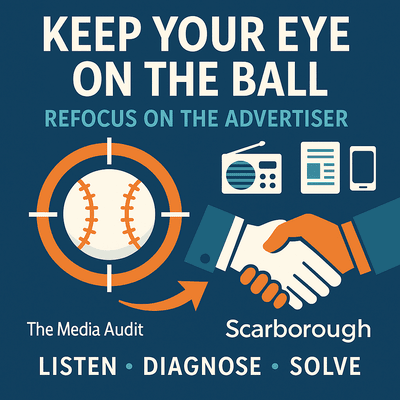
Keep Your Eye on the Ball: Why Media Must Refocus on the Advertiser
Media sales professionals must refocus their efforts on understanding the advertiser’s business rather than simply promoting their own multi-media offerings. While digital media has become ubiquitous and powerful, traditional media still plays a vital role in building trust, reach, and local relevance—and the two work best when used together. Tools like The Media Audit and Scarborough provide rich qualitative insights into consumer behavior and advertiser categories, helping media reps consult rather than just sell. The key to success lies in empathetically listening to advertisers, diagnosing their challenges, and crafting solutions that genuinely serve their goals. In a world full of shiny digital distractions, media reps must “keep their eye on the ball”—the advertiser—and build relationships rooted in strategy, not salesmanship.
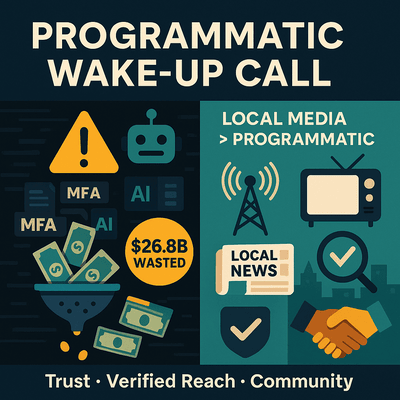
The Programmatic Wake-Up Call: Why Local Media Is More Valuable Than Ever
The Association of National Advertiser’s latest report reveals that over $26.8 billion in programmatic ad spend is wasted due to inefficiencies like inflated metrics, bot traffic, and low-quality ad placements. Despite promises of automation and scale, programmatic advertising continues to struggle with transparency and performance, especially on MFA and AI-generated “slop sites.” In contrast, local media offers verified reach, trusted environments, and community relevance, making it a more reliable and impactful choice for advertisers. Emerging trends like email monetization and Generative Engine Optimization (GEO) further highlight the need for direct, human-centered communication. For advertisers seeking real results, local media backed by audited data is not just a safe bet—it’s a strategic advantage.
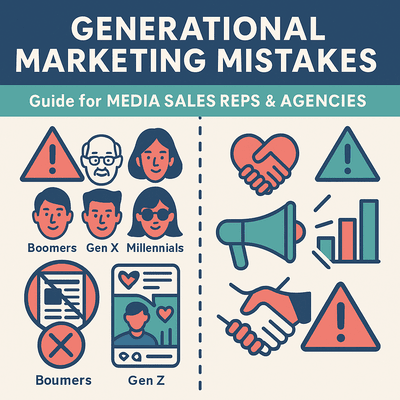
Generational Marketing Mistakes Costing Local Businesses: A Guide for Media Sales Reps and Agencies
Local businesses are making costly generational marketing mistakes by relying on oversimplified stereotypes, with Harvard Business Review research showing that generational boundaries are often fuzzy, yet widely used labels create ineffective campaigns that alienate existing customers while failing to attract new demographics. Common errors include creating separate campaigns for each generation that fragment brand identity, using outdated assumptions about preferences, and focusing on channels over meaningful messaging. Successful businesses are shifting toward authentic multi-generational messaging that emphasizes universal values like trust and community connection while adapting communication styles for different platforms rather than creating different brand personalities. Media sales reps can add value by helping clients conduct cross-generational audience analysis, develop platform-appropriate messaging frameworks, and measure success through both generational response tracking and overall brand health metrics.