The Future of Local: How Data Is Rewriting the Story of TV Advertising
Let’s begin with a confession: local TV advertising used to be a bit like throwing darts in the dark. You had a general sense of where the target was—maybe it was a suburban mom watching the 6 o’clock news, or a retiree catching the weather before Wheel of Fortune—but you couldn’t be sure. You aimed, you hoped, and you prayed the ratings were right.
But something has changed. The dartboard now glows. The room is lit. And the darts? They’re guided by data.
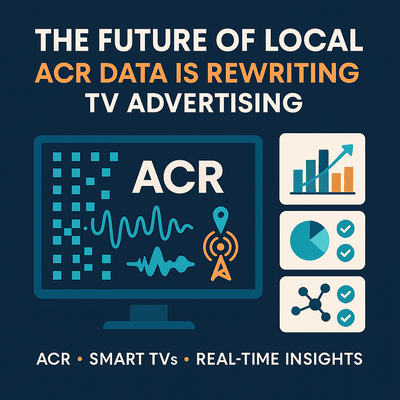
Welcome to the age of Automatic Content Recognition (ACR)—a technology that’s quietly revolutionizing how local media reps and ad agencies understand, reach, and engage audiences. It’s not flashy. It doesn’t come with a jingle. But it’s reshaping the very foundation of local advertising.
As Keith Kazerman, President of Streaming at Locality, puts it:
“ACR allows us to truly understand the engagement that audiences are having across every screen.”
That’s not just a technical statement. It’s a philosophical one. It signals a shift from guessing to knowing, from broadcasting to precision, from selling airtime to solving problems.
The Old World: Ratings, Reach, and Ritual
For decades, local TV advertising was built on a simple premise: reach as many people as possible. Nielsen ratings were the gospel. Prime time was sacred. And media reps were the high priests of GRPs and CPMs.
It was a world of ritual. You bought spots during the evening news because that’s what everyone did. You pitched based on demographics that were broad enough to include everyone and specific enough to sound scientific.
But beneath the surface, there was always a quiet anxiety. Did the ad actually reach the right person? Did it resonate? Did it drive action?
The truth is, we didn’t know. We hoped.
Enter ACR: The Data Whisperer
ACR changes everything. Embedded in smart TVs, ACR technology captures what content is being watched—whether it’s live broadcast, cable, streaming, or even gaming. It doesn’t rely on surveys or extrapolations. It sees. It records. It learns.
And for local advertisers, that’s a game-changer.
Imagine being able to tell a local credit union that their target audience—young families in zip codes 75001 to 75009—watched a specific show at 8:30 p.m. on Tuesday, and that 63% of them saw their ad. Not guessed. Saw.
This is no longer advertising. It’s audience engineering.
The Human Side of Data
Now, if this were a Silicon Valley story, we’d stop here and celebrate the algorithm. But this is a local story. And local stories are about people.
ACR doesn’t just give us data—it gives us insight into behavior. It tells us when people tune in, when they tune out, what they binge, what they skip, and what they rewatch. It’s a window into the rhythms of real life.
For media reps, this means shifting from selling airtime to consulting on strategy. It means asking questions like:
- What does your customer care about?
- When are they most engaged?
- What kind of content do they trust?
The Rise of the Local Data Strategist
This shift is creating a new kind of media professional: the local data strategist. They’re part analyst, part storyteller, part therapist. They don’t just pitch—they diagnose. They don’t just sell—they solve.
They use ACR data to build campaigns that are timely, targeted, and measurable. They help local businesses understand not just who their customers are, but how they behave—and how to reach them in meaningful ways.
This is a profound cultural shift. It elevates the role of the media rep from vendor to partner. From order-taker to advisor.
And it’s long overdue.
The Democratization of Precision
One of the most exciting aspects of ACR is that it’s accessible. You don’t need a national budget or a Madison Avenue agency to use it. Local businesses—plumbers, dentists, car dealers, credit unions—can now access the same level of audience insight as Fortune 500 brands.
This democratization of precision is leveling the playing field. It’s allowing small businesses to compete with big ones—not by spending more, but by spending smarter.
It’s also forcing local media companies to up their game. They can’t rely on legacy relationships or generic pitches. They have to bring data. They have to bring strategy. They have to bring value.
The Ethical Frontier
Of course, with great data comes great responsibility. ACR raises important questions about privacy, consent, and transparency.
Just because we can track behavior doesn’t mean we should exploit it.
The best media reps will be the ones who use data ethically—who prioritize relevance over intrusion, and personalization over manipulation.
They’ll be the ones who ask not just, “Can we target this viewer?” but “Should we?”
This is where the human element matters most. Technology can guide us, but values must lead us.
The New Narrative of Local Advertising
So what does the future look like?
It looks like a local car dealership using ACR data to run ads during streaming sports events, knowing that their target audience watches those games religiously.
It looks like a regional bank tailoring its messaging based on the viewing habits of young professionals who stream financial news on weekday mornings.
It looks like media reps walking into client meetings with dashboards, not just rate cards—with insights, not just impressions.
It looks like local advertising becoming smarter, more empathetic, and more effective.
ACR and the Art of Listening
At its core, ACR is a tool for listening. It listens to what people watch, when they watch, and how they engage. It listens without interrupting. It listens without judging.
And in a world where attention is fragmented and trust is fragile, listening is the most powerful thing a media company can do.
ACR doesn’t replace creativity—it enhances it. It doesn’t eliminate intuition—it informs it. It doesn’t make advertising mechanical—it makes it meaningful.
Final Thoughts: The Soul of Local
There’s a temptation to see ACR as just another tech acronym in a sea of acronyms. But that would be a mistake. ACR is not just about data—it’s about understanding people.
And local media has always been about people. It’s about knowing the community, telling its stories, and helping its businesses grow.
ACR doesn’t change that mission. It amplifies it.
It gives local media reps the tools to be more relevant, more responsive, and more responsible. It gives local advertisers the confidence to invest in campaigns that work. And it gives local audiences the respect they deserve—by delivering messages that matter.
So yes, the dartboard now glows. The room is lit. And the darts? They’re guided by insight.
But the goal remains the same: to connect, to serve, and to build something that lasts.
.png)