

Mastering Sales Leadership: Proven Strategies to Elevate Team Performance and Drive Revenue Growth
The person you hired wants to be successful, even if they don’t yet know what that means. This new member of your team wants to do good work and succeed. As a sales leader, you must fill in the blanks for the people in your charge. If you don’t set the standards that ensure success, then no one knows what success means, nor will they know what to do and how to win deals.

Thinking Outside The “Box”
A few of the panelists started showing organization charts, discussing how they were restructuring their organizations to improve results. Each chart showed hierarchies of boxes, each with a functional name. Some showed how they were restructuring sales and marketing, moving to a Revenue structure. The presented the “before” and “after” org charts, the only thing that seemed to have changed is the CRO role and a RevOPs hierarchy combining marketing and sales ops.

7 Effective Brainstorming Strategies to Inspire Creativity
We brainstorm ideas all the time, often without even realizing it. We all face some sort of difficulty or challenge on a regular basis which causes us to brainstorm solutions. Brainstorming ideas is something innate in all of us when we deal with personal tribulations, but brainstorming also occurs in a professional setting. In fact, brainstorming ideas is necessary when it comes to teams and companies.
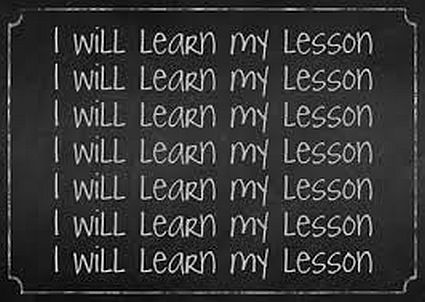
Have You Learned Your Lesson Yet?!
During the Holidays, together with family, often the conversation goes back to old memories. In one of these conversations, my Mom and Sister ganged up on me. They reminded me of the struggles my Dad and I had with my misbehavior.

Mastering B2B Sales: Essential Changes Sales Leaders Must Implement Now
One thing many get wrong is that they don’t do the work to master B2B sales. Instead of prioritizing the improvement of our craft, most go about their business without improving over time. At the time of this writing, win rates are abysmal, and it is the same for quota attainment. There are a number of reasons why sales organizations fail to improve their sales results.

The No. 1 Mistake Well-Intentioned Leaders Make That Harms Their Team
Studies reveal a startling paradox: 82% of leaders believe they’re supporting their teams effectively, yet only 38% of employees feel genuinely supported. Moreover, this disconnect stems from what initially appears to be a positive leadership trait – what I call “the protection paradox” – the desire to protect teams from challenges. However, this well-intentioned shield ultimately becomes the very barrier that stifles growth and erodes trust. As an executive leadership coach working alongside pioneering organizations,

Top 10 Sales Manager Mistakes and How to Avoid Them
As a sales manager, it’s crucial to avoid common pitfalls that can negatively impact team performance. Here’s how to navigate ten key mistakes: Assuming Everyone Works Like You: Establish clear KPIs to guide different working styles. Hiring Based Solely on Experience: Prioritize performance over experience. Delaying Firings: Act quickly when someone isn’t performing. Failing to Identify Bad Reps: Remove toxic or unproductive reps promptly. Relying on Activity over Results: Focus on outcomes, not just activity. Allowing Low Win Rates: Coach reps, but don’t tolerate chronic underperformance.

Control Disguised As Coaching
Often, when I talk to managers, they tell me how much time they spend coaching. They tell me stories of meeting, weekly, with their people, doing reviews, pipeline discussions, activity discussions—-all sorts of “coaching meetings.” They say, “Dave, coaching is important and we are spending a lot of time coaching…..”

If You Can’t Do It Yourself…
“If you can’t do it yourself, you probably shouldn’t be using AI!” This was a brilliant observation by James Pursey in an outstanding seminar on AI in sales. The only modification I would make would be to say, “If you can’t do it excellently yourself, you probably shouldn’t be using AI!”

Examples of Role Play Scenarios for Sales Training
Creating realistic and engaging role-play scenarios is crucial for sales training as it helps participants develop and refine their skills in a controlled, practice-based environment. Below, I provide two detailed examples of role-play scenarios that can be used in sales training workshops, each aimed at enhancing different aspects of the sales process.

Boosting Media Sales Through Role-Playing: The Key to Success
Sales professionals in the media industry face unique challenges. With a constantly evolving landscape of digital platforms, content marketing strategies, and client needs, mastering the art of the sale requires more than just product knowledge and industry insight. To stand out, media sales professionals must hone their communication, negotiation, and problem-solving skills. One of the most effective ways to do this? Role-playing.

The Power of Role-Playing in Sales: Mastering Conversations to Boost Success
Some of the best sales organizations use role-play to sharpen their skills. Role-play is a powerful tool because it allows sales teams to practice the language they need to use. Sales is a conversation. Sales managers who emphasize role-play provide their teams a safe place to find the right words—or borrow them from other sales reps who have mastered their talk tracks.

Leveraging the Sales Team in the Collections Process
Historically, the interaction between the credit collections department and the sales team has been an adversarial relationship. The credit collections team believes that salespeople have no concern for collections and just want to sell to anyone to make commissions and meet quotas. The sales team sees the credit collections department as an obstacle to opening new accounts and closing deals.
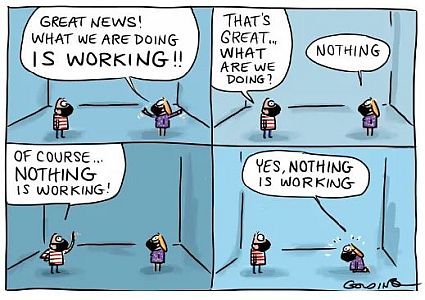
We’re Doing Everything Right, But Nothing’s Working!
Scratching my head at these and similar statements, I wonder, “If you are doing everything right, then it should be working! That’s how designing and executing your GTM/selling strategies work! If it isn’t producing the desired outcome, then there is something flawed in the design or in what you are doing!”

7 Signs Your Leadership Style Is Driving Away Your Best Employees
The greatest threat to your organization’s success isn’t your competition—it’s your leadership style driving top talent out the door. In my work coaching senior executives, I’ve documented a concerning pattern: leaders often remain blind to the behaviors that prompt their most valuable employees to quietly plan their exits.