The LinkedIn Frequency Formula: What Local Media and Agencies Can Learn from Social Media's Sweet Spot
New research on posting frequency offers strategic insights for account executives and agency professionals building client relationships and demonstrating expertise
In the world of advertising and media sales, consistency has always been king. But new research from Buffer analyzing over 2 million LinkedIn posts reveals just how dramatically frequency impacts performance—offering valuable lessons for local media account executives and advertising agency professionals who rely on the platform to build relationships, demonstrate expertise, and generate leads.
The study, conducted by Buffer's data scientist Julian Winternheimer across 94,000+ accounts, challenges conventional wisdom about social media posting and provides concrete evidence that more frequent posting delivers better results per post—not just higher total engagement. For local media sales professionals and agency account executives competing for attention in crowded markets, these findings offer a strategic roadmap for leveraging LinkedIn more effectively while drawing powerful parallels to traditional media frequency principles.
The Frequency Sweet Spot: Why More Really Is Better
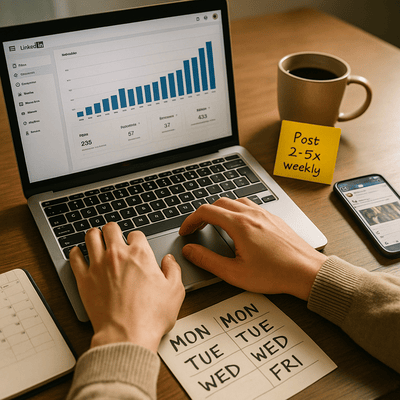
The research reveals a clear pattern that mirrors what media professionals have long understood about traditional advertising: sustained exposure drives exponential results. Accounts posting 2-5 times weekly see +1,182 more impressions per post and a 0.23 percentage point lift in engagement rate compared to once-weekly posters. Those posting 6-10 times weekly gain +5,001 more impressions per post with a 0.76 percentage point increase in engagement. Most dramatically, accounts posting 11+ times weekly achieve nearly 17,000 more impressions per post, triple the engagements, and a 1.4 percentage point jump in engagement rate.
For local media account executives, this data provides powerful ammunition when discussing advertising frequency with clients. Just as LinkedIn rewards consistent posting with algorithmic amplification, traditional media delivers compounding returns for advertisers who maintain consistent presence. The parallel is striking: both digital and traditional platforms reward sustained investment over sporadic campaigns.
"The myth of 'posting too much' probably comes from other platforms, where algorithms can suppress frequency," the research notes. "On LinkedIn, the opposite is true—more posts mean more opportunities for distribution." This principle directly translates to local media sales, where consistent advertiser presence builds both audience familiarity and market share over time.
The implications extend beyond simple posting strategy. The research demonstrates that LinkedIn's algorithm functions much like traditional media's cumulative audience effects—each exposure builds upon previous ones, creating a compound awareness benefit that cannot be achieved through sporadic activity. This finding validates what media professionals have argued for decades: frequency amplifies reach and effectiveness in ways that single exposures cannot match.
The Science Behind Social Media Success
The Buffer study employed sophisticated analytical methods that mirror the rigor traditionally applied to media research. Using Z-score analysis and fixed effects regression, researchers controlled for account size, industry differences, and content quality variations to isolate the pure impact of posting frequency. This methodological approach addresses the most common criticism of social media research—that correlation doesn't equal causation.
The findings reveal that LinkedIn's algorithm operates on principles similar to traditional media buying concepts. Just as radio stations offer frequency discounts because repeated exposure increases advertising effectiveness, LinkedIn rewards consistent posters with enhanced distribution. The platform's algorithm interprets regular posting as a signal of content quality and user engagement, creating a virtuous cycle where more frequent posting leads to better per-post performance.
This algorithmic behavior reflects broader changes in how professional audiences consume content. Unlike consumer social platforms where novelty drives engagement, LinkedIn users value consistency and expertise. The research shows that professional audiences reward content creators who demonstrate sustained commitment to sharing insights, much like how business-to-business advertisers benefit from maintaining consistent presence in trade publications and industry events.
Strategic Implications for Media Account Executives
Local media sales professionals can extract several key insights from LinkedIn's frequency research that apply directly to their client relationships and personal brand building:
Building Personal Brand Authority: Account executives who post regularly on LinkedIn about industry trends, local market insights, and success stories position themselves as thought leaders rather than just salespeople. The research suggests that moving from sporadic posting to 2-5 times weekly creates the first significant algorithmic boost—similar to how consistent advertiser presence in traditional media builds cumulative brand recognition.
Jennifer Martinez, a television account executive in Phoenix, transformed her approach after analyzing similar frequency data. "I started sharing weekly market insights and client success stories instead of just posting when I felt like it," Martinez explains. "Within three months, I was getting calls from prospects who had been following my content for weeks. They already trusted my expertise before we had our first conversation."
Client Education Opportunities: The LinkedIn data provides concrete evidence that frequency drives performance, offering AEs a new angle when discussing media schedules with clients. Just as LinkedIn's algorithm rewardsconsistent posting, local audiences reward advertisers who maintain regular presence across radio, television, print, and outdoor media.
The research validates the fundamental media planning principle that effective frequency requires sustained exposure over time. When clients question the value of 52-week advertising schedules versus sporadic campaigns, AEs can point to LinkedIn's frequency benefits as proof that algorithmic and audience behavior both favor consistency over sporadic high-intensity efforts.
Relationship Building at Scale: For AEs managing large client portfolios, LinkedIn's frequency benefits suggest that regular engagement—commenting on client posts, sharing industry insights, celebrating client successes—creates exponential relationship value. The platform's new comment impression tracking means that thoughtful engagement now functions like "micro-posts," extending reach without requiring original content creation.
Tom Patterson, a veteran radio account executive in Columbus, Ohio, exemplifies this approach. "I started posting market research and client success stories three times a week instead of whenever I remembered," Patterson explains. "Within six months, prospects were calling me instead of the other way around. They already knew my expertise before we met. More importantly, existing clients started referring other businesses because my posts reminded them of our successful campaigns."
Market Intelligence and Competitive Analysis: Regular LinkedIn posting creates opportunities for market intelligence gathering that traditional networking cannot match. AEs who post consistently about local market trends attract engagement from prospects, competitors, and industry influencers, creating information flows that inform sales strategies and market positioning.
The frequency research suggests that sustained posting creates network effects where each post generates not just direct engagement but also relationship-building opportunities through comments, shares, and private messages. This network expansion mirrors how consistent advertising builds audience reach over time, creating compounding benefits that extend far beyond immediate response metrics.
Agency Professional Applications: Content as Competitive Advantage
For advertising agency professionals, the LinkedIn frequency research offers strategic advantages in new business development, client retention, and industry positioning. Agencies increasingly compete on thought leadership and market expertise, making LinkedIn presence a crucial differentiator in crowded markets.
New Business Development: Agency professionals posting 6-10 times weekly about campaign results, industry insights, and creative strategies benefit from LinkedIn's algorithmic amplification. The research shows this frequency level delivers over 5,000 additional impressions per post—equivalent to a substantial boost in new business visibility without additional media spend.
The data suggests that agency professionals can build awareness among potential clients through sustained content strategies that demonstrate expertise and results. Unlike traditional new business development that relies on cold calling and formal presentations, LinkedIn frequency allows agencies to build relationships and demonstrate value before prospects are actively seeking services.
Client Retention Through Expertise: Regular posting about campaign performance, industry trends, and strategic insights keeps agencies top-of-mind with existing clients while demonstrating ongoing value. The LinkedIn data suggests that consistent posting creates compounding awareness benefits, similar to how consistent advertising builds brand equity for agency clients.
Sarah Chen, creative director at a Minneapolis-based agency, transformed her approach after reviewing similar frequency research. "I committed to posting about our campaigns and creative process twice weekly," Chen notes. "Not only did we attract better clients, but our team started getting invited to industry panels and speaking opportunities. Frequency created a virtuous cycle of visibility and credibility that elevated our entire agency's reputation."
Talent Acquisition Advantages: In a competitive talent market, agencies that maintain strong LinkedIn presence attract better candidates and retain existing staff who take pride in working for visible, respected organizations. The frequency research indicates that sustained posting builds cumulative reputation benefits that extend far beyond direct business development.
The research reveals that consistent posting creates what economists call "signaling effects"—where regular content creation signals agency sophistication, industry engagement, and professional growth opportunities to potential employees. This signaling function becomes particularly valuable in markets where talented professionals evaluate multiple agency opportunities.
Industry Leadership and Speaking Opportunities: The frequency benefits extend beyond direct business development to include industry recognition and thought leadership opportunities. Agencies that post consistently about campaign results, strategic insights, and industry trends position themselves for speaking opportunities, award nominations, and media interviews that further amplify their market presence.
Format Strategy: Maximizing Engagement for Media Professionals
The Buffer research also reveals significant performance differences across content formats, offering tactical guidance for media and agency professionals seeking to maximize their LinkedIn investment:
Carousel Posts (PDF documents): Generate 278% more engagement than videos and nearly 600% more than text posts. For AEs and agency professionals, this suggests creating multi-slide presentations about market research, campaign results, or industry trends delivers maximum impact.
The carousel format allows professionals to present complex information in digestible, shareable formats that LinkedIn's algorithm favors. Market research presentations, campaign case studies, and strategic frameworks work particularly well in carousel format because they allow for detailed storytelling while maintaining visual appeal.
Video Content: Produces 84% more engagement than text posts. Local media professionals can leverage this by sharing client testimonials, behind-the-scenes content from campaigns, or brief market updates in video format.
Video content offers unique advantages for media professionals because it demonstrates personality and expertise in ways that text cannot match. The research suggests that video posts receive enhanced algorithmic distribution, making them particularly valuable for professionals seeking to expand their network reach beyond existing connections.
Image Posts: Generate 72% more engagement than text-only posts. Simple infographics about local market data, campaign results, or industry statistics provide easy content creation opportunities with proven performance benefits.
The visual advantage of image posts reflects broader trends in professional communication, where complex information presented visually receives more attention and engagement than text-heavy alternatives. For time-pressed media professionals, image posts offer efficient content creation options that deliver measurable performance benefits.
Text Posts with Links: Consistently underperform because they direct users away from LinkedIn. The research recommends keeping links in comments rather than post bodies—a crucial tactical insight for professionals sharing industry articles or case studies.
This finding has significant implications for media professionals who frequently share industry news and research reports. The optimal strategy involves creating original commentary about external content in the post body, then including relevant links in the comments to maintain engagement while providing additional resources.
The Local Market Advantage: Size-Agnostic Benefits
One of the most significant findings for local media and agency professionals is that frequency benefits apply regardless of account size. The research controlled for account-level differences and found that small accounts with hundreds of followers saw the same relative performance lifts as large accounts with tens of thousands.
"Whether you have 500 followers or 50,000, increasing your posting frequency makes your posts perform better relative to your own average," the study concludes. This finding is particularly relevant for local market professionals who may feel disadvantaged competing against national industry voices with larger followings.
Mark Rodriguez, account executive for a regional television group, discovered this principle firsthand. "I thought my 800 LinkedIn connections meant posting frequently wouldn't matter," Rodriguez recalls. "But when I moved from monthly to weekly posting about local advertising trends, my engagement doubled and I started getting referrals from connections I hadn't spoken to in years."
The research suggests that algorithmic amplification rewards activity and consistency over account size, creating opportunities for local professionals to compete effectively against larger national competitors through sustained content strategies. This finding democratizes LinkedIn success, suggesting that commitment and consistency matter more than existing audience size.
Geographic Targeting Advantages: Local media and agency professionals benefit from LinkedIn's geographic targeting capabilities, which amplify the frequency benefits within specific markets. The research indicates that consistent posting within defined geographic areas creates concentrated awareness effects that can dominate local markets despite smaller overall followings.
Lisa Wong, account manager for a Sacramento radio group, leveraged this geographic advantage effectively. "I started posting twice weekly about Sacramento market trends and local business spotlights," Wong explains. "Even though I only had 400 connections, my posts started reaching thousands of local business owners because LinkedIn's algorithm recognized my local relevance and consistency."
Advanced Implementation Strategies: Building Sustainable Posting Rhythms
While the research demonstrates clear frequency benefits, practical implementation requires balancing performance optimization with sustainable content creation. The study's authors emphasize quality over quantity, noting that "low-quality content posted frequently won't yield great results."
For media account executives and agency professionals, sustainable implementation strategies include:
Content Calendar Development: Planning content themes around industry events, quarterly business cycles, and seasonal advertising patterns ensures consistent posting while maintaining relevance and timeliness. The research suggests that algorithmic benefits compound when posting frequency aligns with audience expectations and industry rhythms.
Strategic Content Repurposing: Transform single insights into multiple formats. A successful campaign case study might become a text post about results, a carousel presentation showing creative execution, a video testimonial from the client, and an infographic displaying key metrics. This approach maximizes content value while maintaining posting frequency.
Collaborative Content Creation: Agency teams can collaborate on content creation, with different professionals contributing expertise areas while maintaining consistent posting schedules. The research indicates that algorithmic benefits accrue to individual accounts, suggesting that multiple team members posting frequently creates multiplicative benefits for agency visibility.
Strategic Commenting as Content Extension: LinkedIn's new comment impression tracking means thoughtful engagement on others' posts functions like micro-content. Spending 10-15 minutes daily commenting meaningfully on industry posts, client updates, and prospect content creates visibility without requiring original post creation.
The commenting strategy becomes particularly valuable for professionals seeking to maintain LinkedIn presence during busy periods when original content creation becomes challenging. The research suggests that consistent engagement signals maintain algorithmic favor even when posting frequency temporarily decreases.
Competitive Intelligence and Market Positioning
The LinkedIn frequency research also offers competitive intelligence opportunities for media and agency professionals. By monitoring competitor posting frequency and engagement patterns, professionals can identify market positioning opportunities and benchmark their own performance.
"The frequency research helps us understand why certain agencies seem to always be part of industry conversations," observes Lisa Thompson, media director at a regional agency. "They're not necessarily better at what they do, but they're more consistent at sharing what they do. That consistency creates the perception of expertise and market leadership."
This insight suggests that sustained LinkedIn presence can level competitive playing fields, allowing smaller local agencies and media companies to compete effectively against larger competitors through strategic content consistency. The research indicates that algorithmic amplification can overcome follower count disparities when posting frequency and engagement quality remain high.
Market Share Implications: The frequency research suggests that LinkedIn presence increasingly influences market perception and business development opportunities. Professionals who establish consistent posting rhythms early gain cumulative advantages that become difficult for competitors to overcome, similar to how early advertisers in new media channels often maintain long-term market leadership.
Measuring Success Beyond Vanity Metrics
The Buffer research emphasizes per-post performance metrics—impressions per post, engagements per post, and engagement rate per post—rather than total volume metrics that can be misleading. This approach offers valuable lessons for media and agency professionals measuring their LinkedIn performance.
Rather than focusing solely on follower growth or total likes, professionals should track:
Impression Growth Per Post: Indicating algorithmic amplification and reach expansion beyond existing network connections. This metric reflects LinkedIn's assessment of content quality and audience relevance.
Engagement Rate Consistency: Showing audience quality and content relevance over time. Consistent engagement rates indicate that content continues to resonate with audiences despite algorithm changes and increased competition.
Comment Quality and Business Relevance: Measuring relationship-building effectiveness through the depth and professional relevance of comment conversations. High-quality comments often translate to private message conversations and business development opportunities.
Lead Generation and Business Development Activity: Connecting LinkedIn presence to revenue outcomes through tracking inquiries, referrals, and new business opportunities that originate from LinkedIn interactions.
These metrics better reflect the business development and relationship-building objectives that drive professional LinkedIn use, moving beyond vanity metrics to business-relevant performance indicators that justify time investment and inform strategy refinement.
Long-Term Strategic Implications and Industry Evolution
The LinkedIn frequency research suggests broader implications for how media and agency professionals approach digital relationship building and thought leadership. As traditional networking events and trade publications face digital disruption, LinkedIn becomes increasingly crucial for professional visibility and business development.
Consistent posting builds cumulative advantages that compound over time, similar to how consistent advertising builds brand equity. Professionals who establish regular LinkedIn presence today position themselves advantageously for future business development opportunities, talent acquisition needs, and industry recognition.
"Social media presence is becoming table stakes for media professionals," notes David Chen, general manager of a regional media group. "Clients expect their media partners to understand digital engagement, and LinkedIn frequency research provides a roadmap for building that understanding while demonstrating expertise."
The research ultimately suggests that LinkedIn success requires treating the platform as a long-term brand-building investment rather than a sporadic networking tool. For local media account executives and agency professionals competing in relationship-driven industries, this approach to LinkedIn engagement offers measurable competitive advantages and sustainable business development benefits.
As traditional industry boundaries continue blurring and competition intensifies, the professionals who master consistent LinkedIn engagement—following the frequency principles that drive algorithmic success—will be best positioned for long-term career and business growth in evolving media and advertising landscapes. The research provides not just tactical guidance but strategic validation for treating social media presence as seriously as traditional networking and business development activities.
Source: https://buffer.com/resources/how-often-to-post-on-linkedin/
.png)