
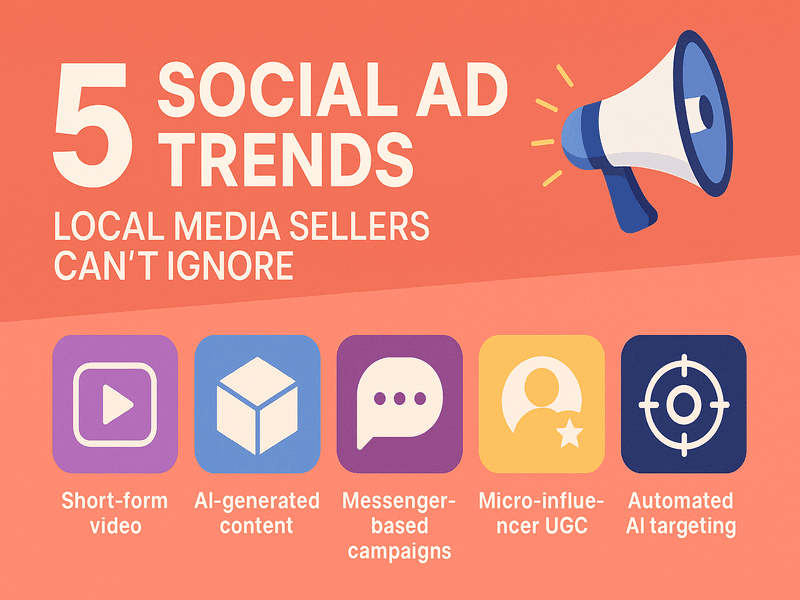
5 Social Ad Trends - Local Media Sellers Can’t Ignore
PPC advertising is surging in popularity thanks to its scalability and fast turnaround. Adrian Falk outlines five key trends reshaping social advertising: short-form video, AI-generated content, Messenger-based campaigns, micro-influencer UGC, and automated AI targeting. For local media sales teams, these shifts highlight new opportunities to integrate digital tactics into traditional campaigns and drive better results for small and mid-size advertisers. Embracing these trends can position local media as savvy digital partners mdash;not just legacy platforms.
Radio Still Reigns: Why Audio Advertising Delivers High-Value Consumers Across All Media Channels
A recent analysis by Katz Radio Group using Nielsen Scarborough data highlights that consumers influenced by radio ads are not only highly engaged but more likely to take action than those influenced by other media like TV, digital, print, or outdoor. From sports betting and luxury car purchases to theme park vacations and fine jewelry, radio-ad-influenced consumers consistently outperform across categories. For local media sellers mdash;including newspapers, magazines, billboards, TV, and digital mdash;this data provides a compelling case for integrating or aligning with radio-style messaging strategies to reach decision-ready audiences. The findings also reaffirm the value of cross-platform promotions and help inform smarter media strategies in a shifting advertising landscape.
Why Local Radio Still Matters in 2025 — And What It Means for All Local Media Sellers
A new report from Crowd React Media, part of the Harker Bos Group, highlights that AM/FM radio remains a vital part of the media mix for U.S. adults, with 76% still tuning in regularly. Local media sellers mdash;from newspapers to TV, out-of-home, and digital mdash;can draw key lessons from radio rsquo;s ongoing relevance: consistent local content, trusted personalities, and convenient access are what keep audiences engaged. Radio rsquo;s dominance during commutes and work hours proves that locally driven, real-time messaging still cuts through. For media reps looking to align with advertisers, the report is a powerful reminder that audience connection often hinges on community relevance and trusted, habitual platforms.
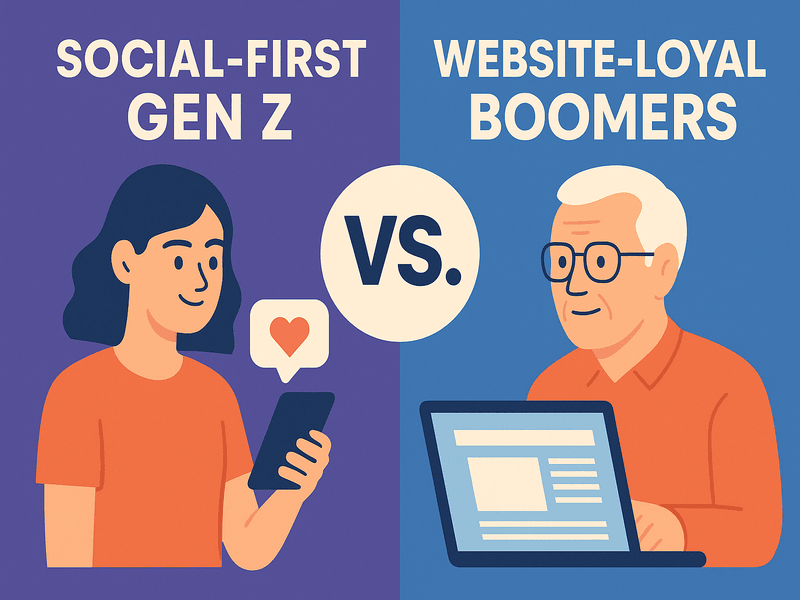
Generational Marketing… What Gen Z and Boomers Want (And How Local Media Can Deliver It)
Understanding how different generations consume media and interact with advertising is critical for local media sales success. A recent pair of studies reveal that Gen Z favors social media and interactive content, while Baby Boomers rely on websites, reviews, and informative messaging. Gen Z still values email—particularly in professional settings—but with different expectations than older cohorts. For local media sellers, tailoring content formats and advertising strategies to each generation's preferences is key to boosting engagement and driving ad revenue.
Navigating the Shifting Automotive Landscape: Key Insights for Local Media Sales
This article provides valuable insights for local media salespeople in newspapers, magazines, billboards, TV, and digital platforms. It covers recent developments in the automotive industry, including tariff adjustments, technological advancements, and production shifts. Understanding these changes can help media sales professionals tailor their strategies to better serve automotive clients and capitalize on new advertising opportunities.
Navigating the New Media Landscape: Insights for Local Media Sales from Horizon Media's Study
A study by Horizon Media reveals that Millennial parents and their Gen Alpha children are exhibiting new consumption behaviors, emphasizing multi-platform, interest-driven engagement. Traditional top-down influence models are becoming obsolete, with peer and community-driven influence gaining importance. The study highlights the shift from hyper-personalization to community-driven discovery and the importance of content relevance over creator popularity. These insights are crucial for local media salespeople, helping them adapt their strategies to resonate with today's dynamic audience.
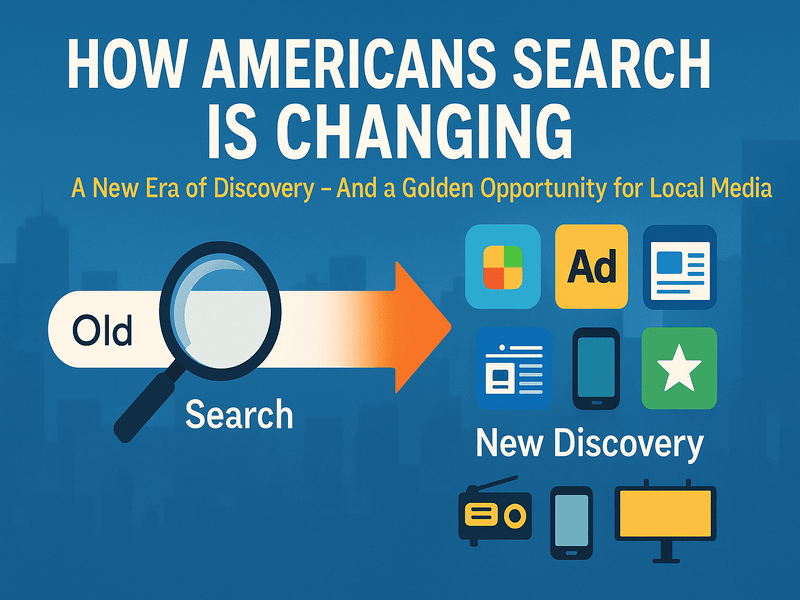
How Americans Search Is Changing And What It Means for Local Media Sales
A new report shows that 55% of Americans say their online search habits have shifted significantly over the past five years—and they're increasingly discovering products through ads, editorial content, and apps rather than traditional search engines. This evolution marks a major opportunity for local media sellers: consumers trust ads across multiple platforms and make quick purchasing decisions when they discover products via native, embedded content. For local sales teams, the key takeaway is clear—you don’t have to be Google to win in the search-driven economy. You just need to help advertisers show up in the right context, across trusted platforms.
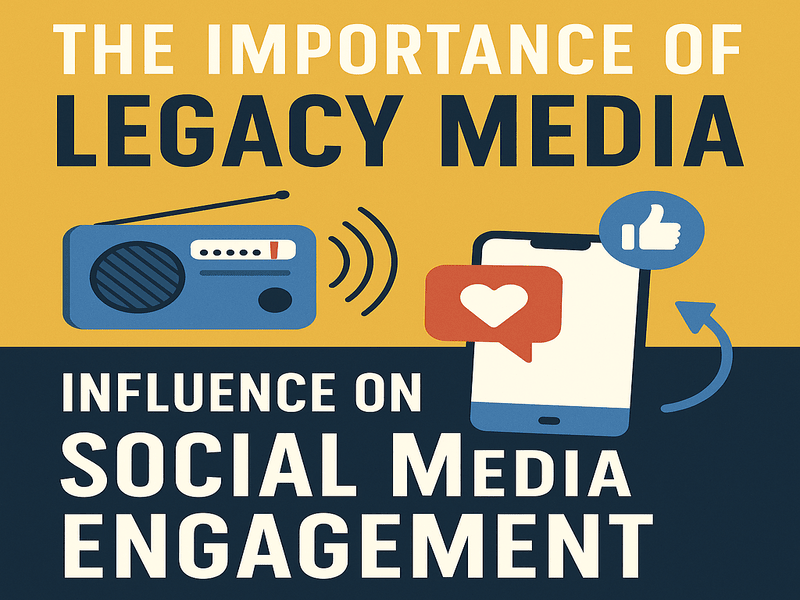
The Importance of Legacy Media - Influence on Social Media Engagement
Executive Summary A study by Critical Mass Insights reveals that radio listeners are significantly more likely to engage with social media ads for products they’ve heard advertised on the radio. The survey, conducted among 1,000 U.S. consumers aged 18-64, found that 55% of listeners are more likely to click on social media ads after hearing a radio ad, with this likelihood rising to 64% among adults aged 25-44. Additionally, 72% of consumers are more likely to notice social media ads for products they’ve heard about on the radio, and 7 in 10 are more likely to read and try new products advertised on social media after hearing about them on the radio. This study highlights the powerful synergy between legacy media, specifically radio advertising and social media engagement, making it a valuable strategy for local media outlets.
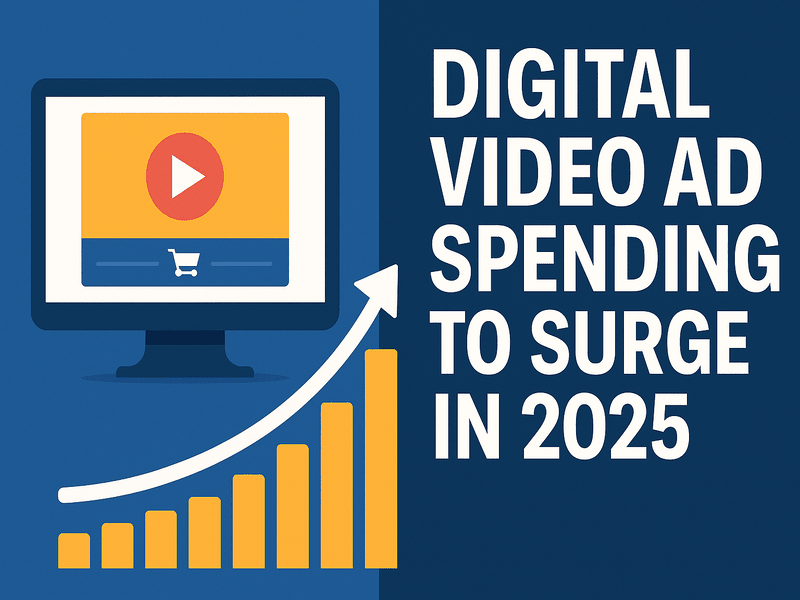
Digital Video Ad Boom in 2025—What It Means for Local Media
The Interactive Advertising Bureau (IAB) forecasts a 14% growth in digital video ad spending in 2025, reaching $72 billion. This growth presents a significant opportunity for local media salespeople to tap into new revenue streams by selling video ads on their websites. The shift towards digital video is driven by its ability to deliver engaging, personalized, and shoppable experiences, despite economic uncertainties. As digital video is set to capture nearly 60% of total TV/video ad spend, local media salespeople can leverage this trend to enhance their sales strategies and offer more value to advertisers.
Media Usage Expected to Dip in 2025 - Why It’s a Wake-Up Call for U.S. and Canadian Media Sellers
For the first time since 2009, total media usage across the U.S. and Canada is expected to decline, with a projected 0.3% dip in 2025 according to PQ Media. The slowdown highlights how digital media growth can no longer offset traditional media declines — but it also reinforces that traditional media still commands strong, high-quality audiences. For local media sellers, it’s a prime opportunity to position broadcast, print, and trusted digital outlets as powerful, stable options for advertisers aiming to maximize reach in a fragmented landscape.
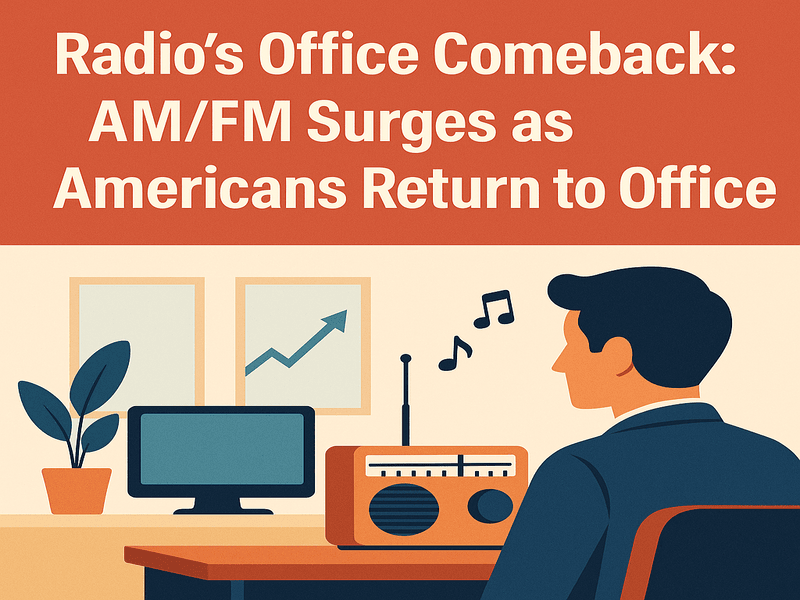
Radio’s Office Comeback: AM/FM Surges as Americans Return to Office
New research from Edison shows that AM/FM radio listening at work has jumped 10 share points year-over-year, signaling a major shift as more Americans return to office routines. AM/FM continues to dominate ad-supported audio in the car and is now the leading choice on smart speakers. With 66% of U.S. adults tuning in daily, radio offers consistent, high-impact reach across devices and demographics. Combined with podcasting’s rapid growth, audio is once again proving to be a cornerstone of effective advertising.
Radio's Real Power: Trust, Reach, and Resilience in Tough Times
With uncertainty in the economy it is time to prepare for a tougher sales season. When the economy slows down, advertisers often ask, “What can I cut?” But the smarter question is, “What can’t I afford to lose?” And the answer—especially for local and regional businesses—is radio. That’s because radio provides one of the strongest, most consistent, and most personal connections to the consumer. At a time when trust, familiarity, and influence matter more than ever, radio delivers them all in abundance.
TV News Sees Surge in Social Media Engagement — Here’s Why It Matters for Local Media
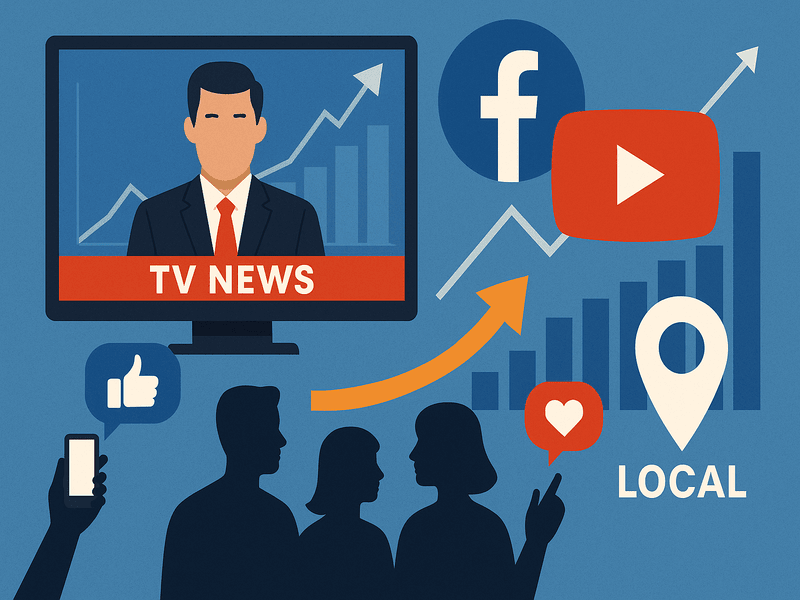
Major broadcast and cable TV news outlets saw significant growth in social video engagement in March, with Fox News, CBS News, CNN, and MSNBC all reporting double-digit increases in both unique viewers and minutes watched on Facebook and YouTube. This surge highlights the growing demand for video news content on social platforms—even among older audiences. For local media, it’s a signal to double down on social video strategies, leveraging local storytelling to drive attention, engagement, and advertiser value. Local stations that repurpose strong content for social platforms and track watch time—not just views—can unlock new growth and revenue opportunities.
Why Television Remains a Must-Buy in Any Economy —Especially a Tough One
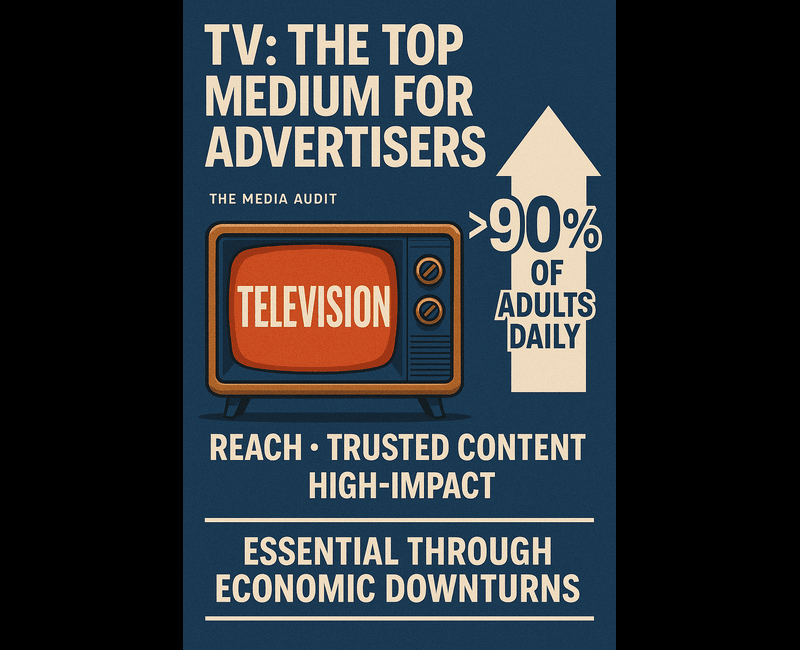
Television remains the most powerful and trusted medium, reaching over 90% of adults daily who watch for more than 4 hours on average, according to The Media Audit. In a down economy, TV’s ability to deliver high-impact advertising alongside trusted news, live sports, and shared cultural events makes it an essential platform for driving brand visibility and purchase intent. Stations that emphasize TV’s reach, emotional connection, and proven ROI—while offering smart packaging and local insights—will help advertisers stay strong through uncertainty and position themselves for faster recovery.
Trusted, Local, and Lasting: Why Newspapers Matter More in Tough Times
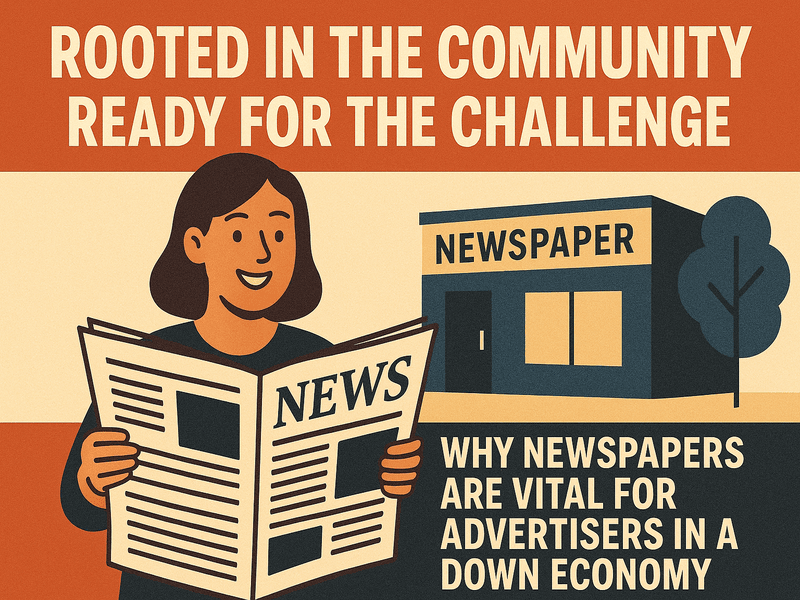
In a challenging economy, newspapers and their websites remain one of the most trusted and effective platforms for reaching engaged, optimistic, and influential consumers. According to The Media Audit, newspapers reach over 40% of adults daily, with readers spending more than an hour each day with content and showing 10% higher financial optimism than the general public. For advertisers, staying visible in this trusted, community-rooted medium is not just smart—it’s essential for maintaining relevance, credibility, and market share.