

The LinkedIn Frequency Formula: What Local Media and Agencies Can Learn from Social Media's Sweet Spot
New research analyzing over 2 million LinkedIn posts reveals that posting 2-5 times weekly delivers +1,182 more impressions per post, with even greater benefits at higher frequencies, providing local media account executives and agency professionals a proven framework for building industry authority and generating leads. The frequency benefits apply regardless of account size, meaning local professionals see the same relative performance improvements as large accounts, while carousel posts generate 278% more engagement than videos. The research parallels traditional media principles where consistent presence builds cumulative brand recognition, giving media AEs concrete evidence for discussing frequency benefits with clients while building their own professional brands. For agency professionals competing on thought leadership, sustained LinkedIn presence creates compounding advantages in new business development, client retention, and talent acquisition that translate directly to revenue growth.

How Advertising Built a Legal Empire in Small-Town Minnesota
Bradshaw Bryant, a small-town Minnesota injury law firm, achieved market dominance by allocating 70% of its marketing budget to radio advertising, tripling their practice size in the first year and achieving 28% unaided brand awareness—133% higher than their nearest competitor. The firm's success demonstrates that traditional media's focus on long-term brand building creates sustainable competitive advantages that digital advertising's short-term conversion focus cannot replicate. This case provides a strategic blueprint for all traditional media—newspapers, television, outdoor advertising, and magazines—to demonstrate their continued value by emphasizing consistent exposure and trusted environments over digital platforms' fragmented attention. The success challenges Madison Avenue's digital-first approach and proves that "being known before you're needed" through patient, traditional media investment remains a powerful driver of long-term business growth.
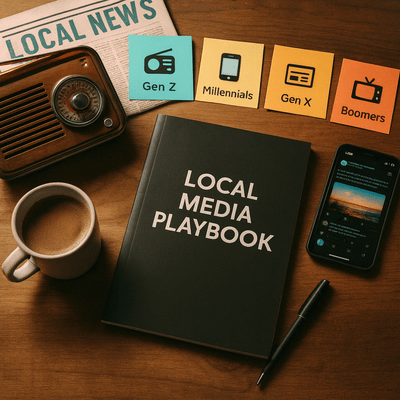
Selling in a Fragmented Media World: Why Local Media Still Wins Across Generations
In a fragmented media landscape, local media—including print, newspapers, radio, and digital—remains a trusted and effective tool across all age groups. Gen Z prefers mobile and social formats, Millennials engage with hybrid print-digital content, Gen X values cross-platform consistency, and Boomers rely heavily on traditional media. Print newspapers continue to deliver strong engagement, especially among older audiences, and are increasingly integrated with digital platforms to reach younger readers. Trust and credibility are key drivers of advertising impact, with local media outperforming national outlets in perceived reliability and community relevance. For media sales professionals and ad agencies, tailoring campaigns by age while leveraging the trust advantage of local media is essential for success.
From Fringe to Frontline: Podcasting’s Rise to New Revenue Path for Local Media and Agencies
Podcast advertising continues to outperform expectations, with Nielsen data showing strong lifts in brand awareness, purchase intent, and consumer engagement across nearly 2,000 case studies. Host-read ads are especially effective, with listeners rating podcast hosts as likeable, credible, and relatable—making brand endorsements feel authentic and trustworthy. The medium commands 19% of daily ad-supported audio time among U.S. adults, with even higher engagement among younger and Hispanic audiences. Local media companies, sales reps, and ad agencies can capitalize on this trend by launching community-focused podcasts and offering host-read ad packages to regional advertisers. As podcasting grows, it offers local professionals a powerful new channel for storytelling, brand building, and audience connection.
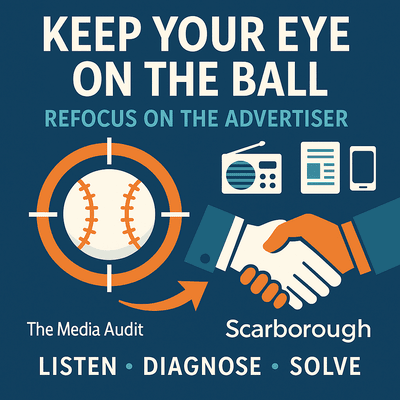
Keep Your Eye on the Ball: Why Media Must Refocus on the Advertiser
Media sales professionals must refocus their efforts on understanding the advertiser’s business rather than simply promoting their own multi-media offerings. While digital media has become ubiquitous and powerful, traditional media still plays a vital role in building trust, reach, and local relevance—and the two work best when used together. Tools like The Media Audit and Scarborough provide rich qualitative insights into consumer behavior and advertiser categories, helping media reps consult rather than just sell. The key to success lies in empathetically listening to advertisers, diagnosing their challenges, and crafting solutions that genuinely serve their goals. In a world full of shiny digital distractions, media reps must “keep their eye on the ball”—the advertiser—and build relationships rooted in strategy, not salesmanship.
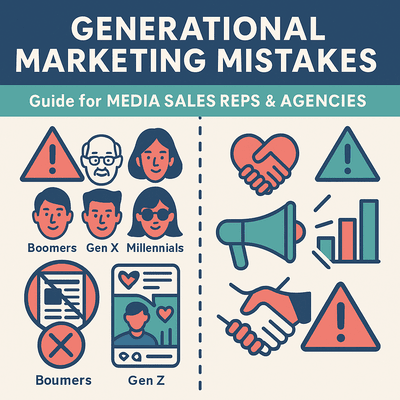
Generational Marketing Mistakes Costing Local Businesses: A Guide for Media Sales Reps and Agencies
Local businesses are making costly generational marketing mistakes by relying on oversimplified stereotypes, with Harvard Business Review research showing that generational boundaries are often fuzzy, yet widely used labels create ineffective campaigns that alienate existing customers while failing to attract new demographics. Common errors include creating separate campaigns for each generation that fragment brand identity, using outdated assumptions about preferences, and focusing on channels over meaningful messaging. Successful businesses are shifting toward authentic multi-generational messaging that emphasizes universal values like trust and community connection while adapting communication styles for different platforms rather than creating different brand personalities. Media sales reps can add value by helping clients conduct cross-generational audience analysis, develop platform-appropriate messaging frameworks, and measure success through both generational response tracking and overall brand health metrics.
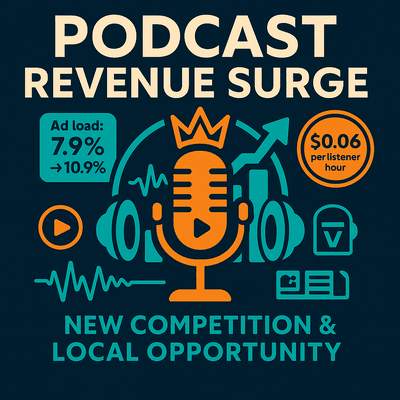
Podcast Revenue Surge: Signals New Competition and Opportunity for Local Media
The podcast industry has evolved from a niche medium to a serious revenue generator, with ad loads increasing from 7.9% to 10.9% of runtime since 2021 and per-hour advertising rates tripling to 6 cents per listener hour in 2024, creating both competitive pressure and significant expansion opportunities for local media. While podcasts compete for advertiser attention, established local media companies possess crucial advantages including existing advertiser relationships, community market knowledge, and content creation infrastructure that position them to capitalize on podcast monetization rather than lose market share. Smart local media operators are launching complementary podcast offerings that create premium advertising packages, extend audience engagement, and generate new revenue streams while leveraging their trusted local brand positioning. The key opportunity lies in integrating podcast strategies into existing business models to offer advertisers multi-platform campaigns that command higher rates than traditional single-format advertising.

Generative Engine Optimization in 2025: The 10-Step Guide Every Digital Manager and Sales Rep Must Master
Generative Engine Optimization (GEO) is the 2025 evolution of SEO, focused on securing brand citations in AI-generated answers from platforms like ChatGPT, Google AI Mode, and Perplexity, where only 2–7 sources are cited per query.
For media sales reps and agency pros, GEO is a new revenue channel—helping clients win high-intent leads, protect brand reputation, and outpace competitors in AI search results. Success requires a 10-step framework, including auditing current AI visibility, mapping real customer prompts, structuring AI-friendly content, optimizing technical signals, and building citation authority.
Local market case studies show GEO can quickly boost inquiries, reservations, and sales when executed with clear KPIs like visibility score, citation count, and positive sentiment. Reps who understand and pitch GEO now will position themselves as forward-thinking partners, securing long-term client trust before competitors catch on.
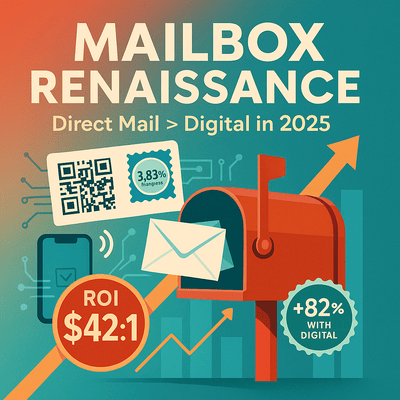
The Mailbox Renaissance: How Direct Mail Is Outperforming Digital in 2025
Direct mail is experiencing a remarkable resurgence in 2025, delivering an average ROI of $42 for every dollar spent while achieving response rates of 3.63%—significantly outperforming digital channels struggling with privacy regulations and ad fatigue. Eighty-two percent of marketing executives plan to increase direct mail investment this year, with modern campaigns leveraging AI-powered personalization and QR codes for attribution tracking that boost response rates by 63% when integrated with digital touchpoints. For local media sales representatives and agency professionals, this shift represents a significant opportunity to offer higher-value services, though success requires mastering new competencies in data strategy and attribution modeling. The convergence of digital advertising headwinds and direct mail's tangible advantages suggests this is a fundamental market realignment rather than a temporary trend, positioning early adopters to capture disproportionate value.
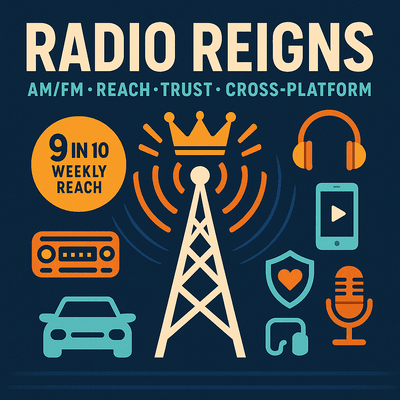
Radio Reigns: Why AM/FM Is Still the King of Reach, Trust, and Cross-Platform Impact
AM/FM radio remains the top media platform in America, reaching 9 in 10 adults weekly and dominating ad-supported audio listening across all age groups. Its evolution from traditional broadcast to digital streaming has expanded its accessibility across smartphones, smart speakers, and connected devices. Case studies show radio’s effectiveness in driving local event attendance, service calls, and tourism engagement through emotionally resonant and timely messaging. Media buyers praise radio’s trustworthiness and personal connection, especially through local hosts and curated content. When integrated with digital strategies like SEO, social media, and retargeting, radio becomes a powerful cross-platform tool for local advertisers and agencies.
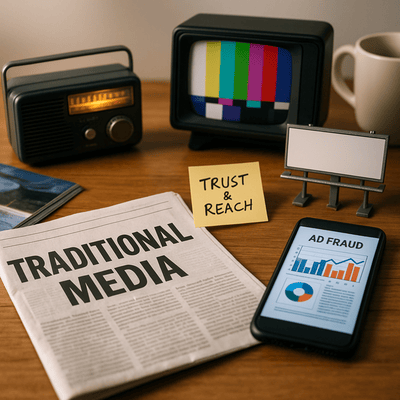
The Enduring Power of Traditional Media in a Digital World
Traditional media—radio, TV, newspapers, magazines, cable, and outdoor—continues to play a vital role in building brand awareness and trust, even as digital platforms dominate the advertising landscape. Despite the rise of programmatic and targeted digital ads, traditional channels offer unmatched transparency, broad reach, and credibility. Growing concerns over digital ad fraud, which costs advertisers billions annually through tactics like click fraud and domain spoofing, are prompting marketers to rebalance their media strategies. Leading brands are integrating traditional and digital media to create full-funnel campaigns that combine mass exposure with precision targeting. As younger audiences rediscover analog experiences, traditional media is proving its resilience and relevance in a hybrid advertising future.
Cracking the Gen Z Code: How Local Media Can Win with Humor and Music
Nearly half (49%) of Gen Z consumers are significantly more likely to pay attention to advertisements that incorporate humor or music they enjoy, presenting a major opportunity for local media sales teams and advertising agencies. Local advertisers have unique advantages in this space because they can tap into hyperlocal references, community inside jokes, and regional musical preferences that create authentic connections with Gen Z audiences. The key to success lies in creating "snackable, scroll-stopping creative" that feels genuine rather than trying too hard, while leveraging local radio stations' music expertise and community knowledge to craft memorable campaigns. With Gen Z's top concern being the economy, local businesses can address these worries through entertaining, music-forward campaigns that position them as accessible solutions while building long-term brand relationships.
The Great AI Paradox in Retail Marketing
New research reveals a striking paradox in retail AI adoption: while 97% of retailers plan to maintain or increase AI investments, only 11% feel fully prepared to deploy these tools at scale, creating enormous opportunities for local media sales professionals to serve as strategic AI implementation partners. The core barriers—fragmented customer data (58% of retailers), high perceived costs (46%), and limited technical expertise (35%)—are exactly the challenges that experienced local media professionals are uniquely positioned to solve for small and medium businesses. Retailers using unified customer data systems dramatically outperform others, using AI daily at twice the rate (60% vs. 29%) and in production environments nearly four times more often (35% vs. 9%). This represents a fundamental shift from selling advertising space to becoming AI strategy consultants who help clients consolidate data, automate marketing processes, and implement personalization at affordable scales. The businesses that will succeed aren't those with the most sophisticated technology, but those with the clearest implementation strategies and most practical approaches to measuring AI's impact on business outcomes.
The Quiet Revolution in Audio: What All Media Can Learn from Customized Creative
Audio advertising is undergoing a creative renaissance, offering unmatched personalization, speed, and scale that other media channels struggle to replicate. With the ability to produce and deploy hundreds of tailored ad variations in real time, brands are using audio to connect with audiences through contextually relevant, hyper-local messaging. Trusted voices like radio hosts and podcast personalities amplify this impact, turning ads into authentic conversations. Case studies from industries like sports betting and telecom show measurable results — from app downloads to increased foot traffic — driven by audio’s creative agility. For advertisers, this signals a broader shift: in a crowded media landscape, intimacy and adaptability are the new competitive edge.
From Ten Blue Links to AI Overviews: What Local Media Pros Must Learn About the New Search Reality
Google’s shift from traditional search results to AI Overviews marks a fundamental change in how users consume information—moving from active synthesis to passive reception. This evolution raises concerns about the erosion of critical thinking and the loss of intellectual curiosity, as users increasingly rely on AI-generated summaries instead of evaluating sources themselves. For local media sales professionals and ad agency teams, this trend underscores the need to create campaigns that re-engage audiences through interaction, storytelling, and local relevance. While AI can serve as a powerful assistant, its design encourages effortless consumption, which may weaken deeper cognitive engagement over time. The challenge ahead is to use AI strategically while preserving the human capacity for questioning, discovery, and thoughtful media experiences.