

Scent of Innovation: What Rare Beauty’s Scratch-and-Sniff Billboards Can Teach Local Media Pros
Rare Beauty launched a groundbreaking scratch-and-sniff billboard campaign in New York City to promote its first fragrance, blending traditional out-of-home advertising with geogated mobile sampling via Shopify’s Shop app. This innovative approach allows passersby to experience the scent and request a free sample by scanning a QR code, turning static media into an interactive, trackable experience. The campaign highlights how sensory engagement and digital integration can drive product trials and social sharing, especially among Gen Z consumers. Local media sellers and ad agencies can draw inspiration from this strategy to create tactile, tech-enabled campaigns that connect physical presence with digital action. Ultimately, Rare Beauty’s activation demonstrates how out-of-home media can evolve into immersive brand experiences that deliver measurable results.
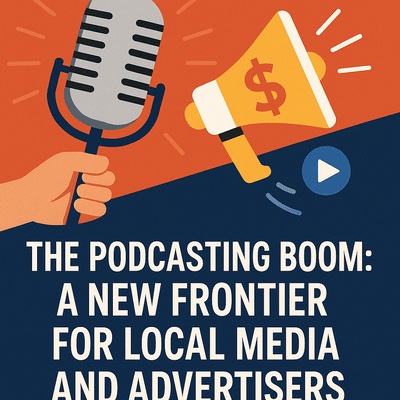
The Podcasting Boom: A New Frontier for Local Media and Advertisers
Podcasting has rapidly grown into a mainstream media channel, with over 135 million monthly U.S. listeners and more than 5 million active shows worldwide. A June 2025 study by Sounds Profitable and Signal Hill Insights found that podcast ads outperform other media in driving consumer action, with 22% of listeners making immediate purchases and high rates of promo code use, brand searches, and social engagement. The personal, trust-based nature of podcast ads makes them especially effective across diverse product categories. Local media outlets—radio, TV, newspapers, and magazines—can extend their advertising offerings by integrating podcasting into their content and sales strategies. As consumer behavior shifts, podcasting offers a high-conversion, high-engagement opportunity that traditional media can no longer afford to overlook.
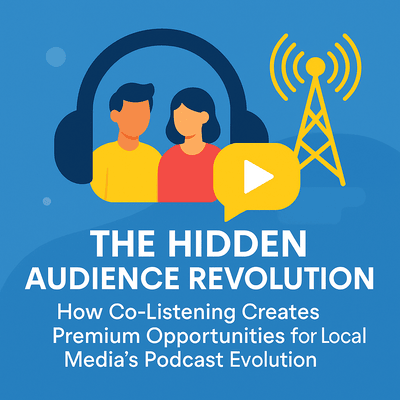
The Hidden Audience Revolution: How Co-Listening Creates Premium Opportunities for Local Media's Podcast Evolution
New research reveals that podcast audiences are significantly larger than download metrics indicate due to "co-listening"—with 16-30% of consumption happening in group settings, particularly on smart TVs where families gather together. This hidden audience multiplier creates unprecedented opportunities for local media companies (newspapers, radio, TV, magazines) to command premium podcast advertising rates by leveraging their decades of community trust and credibility that anonymous digital creators cannot match. Local media brands can position their podcasts as reaching entire households rather than individual listeners, justifying higher CPMs through their unique combination of trusted voices, professional production quality, and deep community integration that drives superior advertising effectiveness. The co-listening phenomenon transforms podcasting from individual consumption to shared household experiences, strongly favoring established local media brands that can offer advertisers authentic community connections and household penetration at premium value.
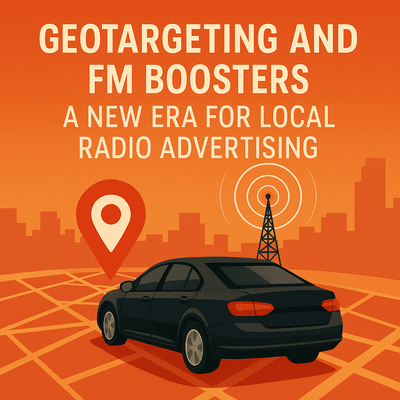
Geotargeting and FM Boosters: A New Era for Local Radio Advertising
Geotargeting has become a dominant strategy in advertising, with 87% of marketers now using it—creating a major opportunity for radio to compete with digital platforms. Thanks to new FCC rules, stations can now use FM boosters and technologies like ZoneCasting to deliver localized ads to specific neighborhoods. Advertiser interest in radio geotargeting has more than doubled since 2020, with 39% saying it makes them more likely to increase radio spending. Tools like Xperi’s DTS AutoStage now provide in-car listening data, helping stations show advertisers exactly where their audiences are tuning in. Together, these innovations position local radio to offer precision, relevance, and measurable ROI—making it a powerful tool for location-based marketing.
Why Big Tech Is Betting on Traditional Media - and What Local Outlets Can Learn
Big Tech companies like Apple, Amazon, Google, and Meta are increasingly investing in traditional media—such as newspapers, radio, and TV—to build trust, reach broader audiences, and manage their reputations. Apple uses full-page print ads to promote privacy, Amazon advertises on local radio to support hiring, and Google sponsors public radio to enhance brand credibility. Despite their dominance in digital advertising, these companies recognize the unique value of traditional media’s trust, attention, and community connection. Local media outlets can leverage this trend by emphasizing their credibility, loyal audiences, and hyper-local reach. If Big Tech sees value in traditional media, local advertisers should too.
Movers Mean Money: How Local Media Sellers Can Win Big by Understanding the Mover Mindset
Realtor.com’s “Unpacking the Mover Mindset” reveals that movers are a high-value audience, making major purchase decisions within 90 days of relocating and showing increased openness to new brands and services. Local media outlets are uniquely positioned to connect advertisers with movers through trusted, community-based messaging. The Media Audit profiles newcomers and their media exposure. The Realtor.com report identifies three key phases of the mover journey—pre-move, move week, and post-move—and four mover personas, each with distinct needs and behaviors. Media sellers can capitalize on this by offering targeted ad packages, welcome guides, and geo-targeted campaigns aligned with mover timing and mindset. By leveraging these insights, local media can drive meaningful results for advertisers and deepen their role as essential partners in the community.
Back-to-School Shopping Starts Early in 2025: A Strategic Opportunity for Local Media
Back-to-school shopping in 2025 is starting earlier than ever, with 67% of K–12 families beginning purchases by early July—driven by inflation concerns and a desire to secure deals. Despite this early start, 84% of shoppers still have half their shopping left, creating a key opportunity for local media to influence purchasing decisions. K–12 families plan to spend an average of $858, while college households expect to spend $1,325, with electronics, clothing, and supplies topping the list. Online and discount stores remain dominant shopping channels, but local media can boost relevance by promoting value, supporting community events, and tailoring messages to both K–12 and college audiences.
Digital Audio Gets a Boost: What Local Media Sellers Need to Know About the Innovid–SiriusXM Partnership
A new partnership between advertising platform Innovid and SiriusXM Media is bringing digital audio into the spotlight by integrating it into the same ad server tools used for video, display, and social media campaigns. For local media sellers — from newspapers and magazines to billboards, digital, and TV — this signals a major shift in how digital audio will be valued in ad models going forward. The collaboration promises better measurement, clearer attribution, and more trust in the value of audio advertising, especially for local markets. With new tools offering deeper insights and cross-channel consistency, digital audio is stepping into a more equal role within the ad ecosystem.
Selling Certainty in Uncertain Times: How Local Media Sales Pros Can Build Trust and Drive Results
In today’s fragmented and fast-changing advertising landscape, local media sellers face the challenge of promoting a product—news and community media—that can feel both complex and misunderstood. But this very complexity offers a unique opportunity: to become more than just ad reps by positioning themselves as trusted partners aligned with their clients' values. By shifting focus from features to solutions, leaning into authenticity, and involving advertisers in the creative process, local media professionals can mitigate risk, deepen trust, and foster long-term client relationships. This approach not only increases revenue potential but also reinforces the critical role of community media in a rapidly evolving world.
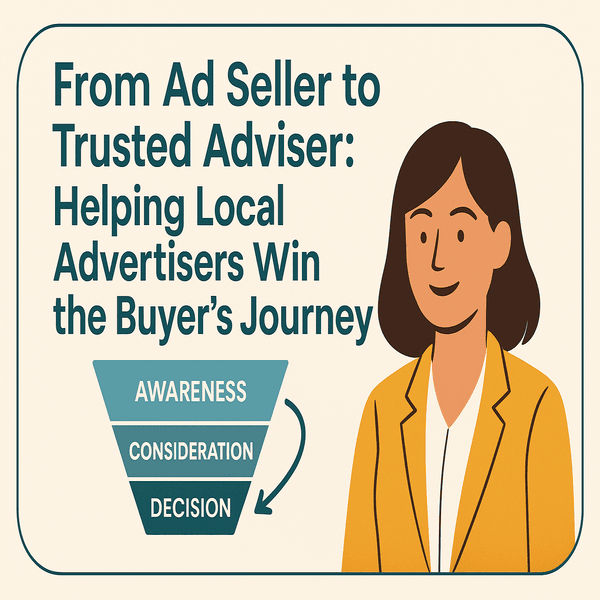
From Ad Seller to Trusted Adviser: Helping Local Advertisers Win the Buyer’s Journey
Today’s local media sales professionals — whether selling newspaper, magazine, TV, billboard, or digital — must go beyond selling ad space. As local businesses face a more complex customer landscape, success lies in understanding and educating clients on the full buyer’s journey. By aligning traditional and digital tactics across awareness, consideration, and decision stages, reps can elevate their value and become indispensable marketing partners. This strategic approach increases campaign effectiveness, boosts renewals, and turns one-off buys into long-term relationships.
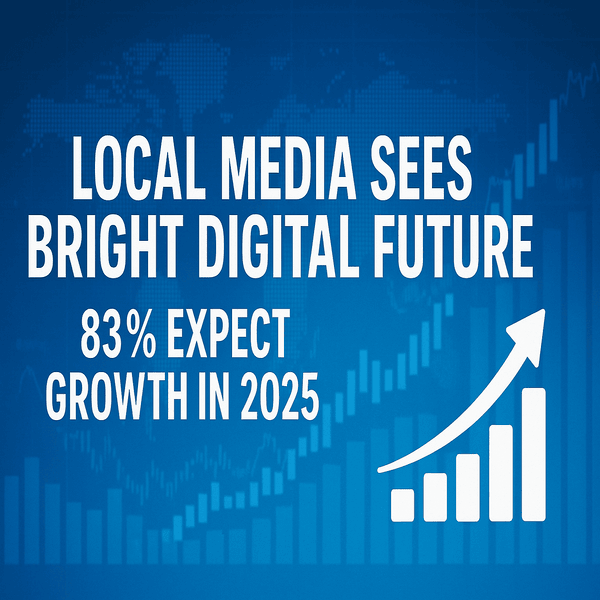
Local Media Sees Bright Digital Future: 83% Expect Growth in 2025
A new survey from the Local Media Consortium finds that 83% of local media professionals expect digital revenue to grow or remain steady in 2025, with gains driven by video, subscriptions, and newsletters. While some challenges persist—particularly around digital ad revenue and staffing—AI adoption, cross-platform content strategies, and audience engagement are gaining ground. These trends provide a strong foundation for media sellers to deliver smarter, more tailored solutions to local advertisers. The data underscores the continued relevance and revenue potential of trusted local media in a fragmented digital landscape.
Programmatic Progress: What Local Media Sellers Need to Know in 2025
The programmatic advertising landscape is evolving in ways that benefit premium, trusted media sellers. A Q1 2025 ANA study reports that effective impressions are rising and low-quality ad placements are sharply declining. However, inefficiencies like optimization gaps and data compliance concerns remain. For local media—TV, print, digital, out-of-home—this presents both a challenge and a powerful opportunity to highlight the unique value of trusted, local ad environments.
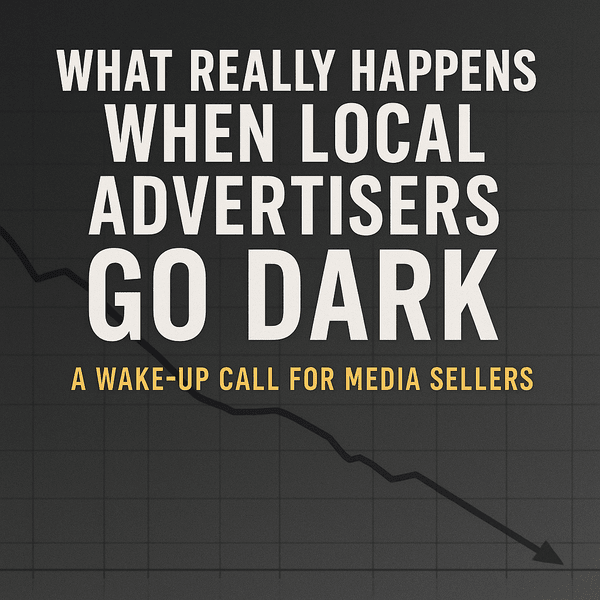
What Really Happens When Local Advertisers Go Dark: A Wake-Up Call for Media Sellers
When brands cut advertising, the immediate savings can look good — but the long-term damage can be devastating. Two major brands that slashed their ad budgets across channels like TV, print, digital, and search saw short-term efficiency gains quickly followed by steep declines in revenue, profits, and customer acquisition. Even when they returned to spending, rebuilding was slow and expensive, with much higher costs per acquisition than before. For local media sales professionals, this case study reinforces the value of maintaining consistent ad presence — and the critical role media reps play in helping advertisers understand the long-term consequences of pulling back.
Media Costs Stabilize - What Slower Inflation Means for Local Advertising in 2025
As media inflation cools across the U.S., local media sellers mdash;across newspapers, magazines, billboards, TV, and digital mdash;are entering 2025 with a more stable pricing environment. The latest ECI Media Inflation Report projects just a 2.5% increase in media costs, with radio ad rates rising only 1% and digital video (CTV) seeing continued price declines. For local media sellers, this presents a key opportunity: while national and global uncertainties persist, local advertisers may find more room to buy and plan confidently. Stability in pricing can help unlock conversations with cautious advertisers, especially in sectors pressured by tariffs and consumer belt-tightening.
Clipping Is Quietly Transforming Advertising — Here's What Local Media Sellers Need to Know
Clipping mdash; the practice of sharing short video segments from longer content across social platforms mdash; is emerging as a stealthy but effective advertising strategy. Initially driven by influencers, this tactic is now attracting major brand dollars, offering new revenue opportunities for local media outlets. While still flying under the radar of regulatory oversight, clipping offers a model of snackable, high-engagement content that local newspapers, magazines, TV stations, and digital sellers can learn from or even leverage. Local media sellers must consider how to integrate or compete with this trend as advertisers look for fast, viral exposure over traditional placements.