

5 Characteristics of High-Performance Organizations
Performance is the conversation of the moment. Some leaders are concerned if remote and hybrid workers are getting their work done. The changes to how work gets done in the last several years have also made us question the performance metrics we’re using to gauge success. These are conversations we should have but aren’t the only levers of performance.

Leaders: Clarify Your Ideas Before Communicating Them
Every week, you communicate a variety of messages to your bosses, employees and customers. Many of your ideas are aimed at creating a better future — that’s what leaders do! But will your ideas work? Will they be understood and acted on? You’ve likely witnessed or lived through change initiatives that don’t achieve the desired results. Why is that? In some cases, the leader’s ideas weren’t fully vetted. In other situations, the poor results were due to ineffective communications.

Be Clear and Consistent When a Crisis Hits
Some leaders tend to minimize or sugarcoat the truth during a crisis because they don’t want their employees or customers to worry or too stressed out to function. During a crisis, it’s often necessary for your business to continue to operating, even if on a limited basis. It is also possible, in fact, probable that you are operating with incomplete or conflicting information. “However, the worst thing you can do is deny, deceive, or deflect — this opens the door to rumors and distractions.

3 Competencies You Need to Lead This Year
The new world of work that we face in 2022 requires new leadership competencies. For example, many employees are struggling with mental health issues. As leaders, you must develop the competency of emotional intelligence so that you can create authentic and deep connections with your employees and support their mental well-being. In this new video, learn more about this and the other leadership competencies you need to lead in 2022.

How Consistent is Your Feedback?
Have you ever played the hot and cold guessing game? “You’re freezing cold, you’re thawing out, you’re getting warmer, you’re on fire!” The person in charge of the game hides an object and then gives you feedback based on how close (hot) or far (cold) you are from what they’ve hidden. Now imagine searching for their hidden object without receiving any feedback on how hot or cold you are.

How Culture Can be a Competitive Advantage
Leaders around the world understand the value of a strong culture. My team’s research for my forthcoming book, Culture Rules, confirms this. We talked to, or surveyed, more than 6,000 leaders and frontline associates from 10 countries about the topic of organizational culture and 72% indicated that culture is the most important driver of performance. We also asked leaders to rank their priorities — creating and maintaining culture ranked 12th. This article is not about why this gap exists; it is about how to close it.

Culture
It has been written that culture eats strategy for breakfast and that culture is a great differentiator among companies. If you query Google on “What is a good company culture?” you will get billions of results (6,250,000,000!) and if you click on the links of the results on the first page you will have a list of over 100 different keys to culture. Purpose, values, mission, respect, freedom, quality of leadership, great compensation, high growth, flexibility, diversity, multi-stakeholder capitalism and on and on the list goes.
De-Bossification
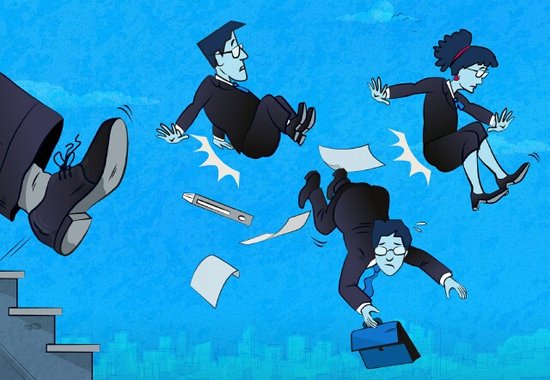
In many industries — particularly “white collar” ones — the era of “bosses” is in decline. There is a rise in the need for leaders, guides, coaches, mentors, role-models, creators and builders, but less of a clamoring for bosses, managers, controllers, monitors, evaluators and paper pushers. This shift has been driven by changing demographics, the spread of technology, the rise of unbundled and distributed work, new behavior expectations and a re-definition of what “work” is — including the rise of fractionalized

Sales Development: 5 Ways to Grow Revenue Without Selling New Customers
Most sales leaders talk too much about new business development. The truth is: they would be better off yapping less about selling new customers and yapping more about growing existing customers. New call-to-action5 Selling Techniques That Grow Revenue Without Selling New Customers

From Dilemma to Deadline-A Sales Leader’s Decision-Making Blueprint
If you are a sales leader or sales manager, you struggle to get everything done. You want to work with your team, but you often find yourself being pulled into meetings and conversations that have no ability to help you reach your sales targets. It can be difficult to decide what gets your attention and what doesn’t deserve your time.

How Do We Make People Better Off By Working with Us?
Usually, when we think about thing, we focus on our return, we answer the question, “How do we make things better for ourselves?” As sales people, we focus on our goals, quotas, and commissions. The customer is only a vehicle for achieving those. As leaders, too often, we focus on ourselves and our own goals. Again, our people become vehicles for achieving those–and if they don’t we find others to do so.
How Do I Get People to Follow Me?
You’ve got questions, we’ve got answers. Hi, I’m Kevin Eikenberry, answering the questions that new and frontline leaders ask us. Actually, it’s our goal to help all leaders be more productive, successful, and confident. And this video series is just one way we do that. Today, I’m asking the question. How do I get people to follow me?

What Does a Sales Manager Do?
There are two ways to describe what a sales manager does. One is to look at the outcomes they are responsible for creating. Another is to look at the individual tasks that deliver those outcomes. There are several things that make it difficult for sales managers to reach their goals, and much of their work aims to overcome these challenges.
On Driving Performance
As leaders, a key element of our job is to maximize the performance of each person on our team. We do this through hiring the right people, training, giving them tools/processes/programs/systems to help them perform, providing the right support, eliminating barriers to their performance, and constantly coaching/developing them. We set performance goals, we measure their attainment against that performance.
Group Dynamics: The Leader’s Toolkit
One of the most significant themes in my practice is the leader whose team of direct reports are experiencing difficulties working together. Most of my clients are CEOs, and they face this challenge with their company’s senior leadership team, but it’s a dilemma that can occur at every level of an organization. And while the leader isn’t solely responsible for their team’s culture, they typically have the greatest ability to influence it–for better and for worse.