

Jeff Bezos: From Garage Startup to Global Empire
Jeff Bezos founded Amazon in 1994 with a vision to build an online bookstore, but his relentless focus on customer obsession, innovation, and long-term thinking transformed it into a global tech and retail empire. From the early days in a Seattle garage to launching Amazon Web Services, Alexa, and acquiring The Washington Post, Bezos consistently pushed boundaries across industries. His leadership style—rooted in experimentation, operational excellence, and bold vision—helped Amazon redefine commerce, logistics, and cloud computing. Bezos’s journey offers powerful lessons in brand building, customer experience, and strategic risk-taking for marketers, media professionals, and entrepreneurs alike.

The McDonald Brothers and the Making of McDonald’s: A Story of Innovation, Ambition, and Transformation
Richard and Maurice McDonald revolutionized the food industry in the 1940s by creating the “Speedee Service System,” a streamlined, assembly-line approach to fast food that emphasized speed, consistency, and affordability. Their innovative model caught the attention of Ray Kroc, a milkshake machine salesman who saw the potential to scale the concept nationwide. After partnering with the brothers and eventually buying them out, Kroc transformed McDonald’s into a global empire through aggressive franchising, operational standardization, and strategic real estate investments. While the McDonald brothers laid the foundation, it was Kroc’s vision and ambition that turned McDonald’s into one of the most recognizable brands in the world. Their story offers powerful lessons in innovation, branding, and the complexities of business partnerships.

Fred Smith: Delivering a Vision That Changed the World
Fred Smith founded FedEx in 1971 with a bold vision to create a reliable overnight delivery service using a centralized hub-and-spoke model and a dedicated fleet of aircraft. Despite early financial struggles—including a now-famous trip to Las Vegas to keep the company afloat—Smith’s leadership and commitment to innovation helped FedEx become a global logistics powerhouse. His people-first philosophy, technological foresight, and customer-centric brand strategy revolutionized the shipping industry. Today, FedEx is a cornerstone of global commerce, and Smith’s journey offers powerful lessons in resilience, operational excellence, and visionary leadership for business and media professionals alike.

Urban One: A Legacy of Voice, Vision, and Victory
Urban One, founded by Cathy Hughes in 1980, has grown from a single AM radio station into the largest African-American-owned multimedia company in the U.S., dedicated to amplifying Black voices across radio, television, digital, and integrated marketing. With the strategic leadership of her son, Alfred Liggins III, the company expanded into TV One, iOne Digital, and Reach Media, becoming a trusted cultural and commercial force. Their mission—“Information is Power”—has guided their programming and community engagement, making them a vital voice during pivotal moments in Black American history. Urban One’s story offers powerful lessons in authenticity, audience connection, and adaptability for advertisers and media professionals alike.
Selling Certainty in Uncertain Times: How Local Media Sales Pros Can Build Trust and Drive Results
In today’s fragmented and fast-changing advertising landscape, local media sellers face the challenge of promoting a product—news and community media—that can feel both complex and misunderstood. But this very complexity offers a unique opportunity: to become more than just ad reps by positioning themselves as trusted partners aligned with their clients' values. By shifting focus from features to solutions, leaning into authenticity, and involving advertisers in the creative process, local media professionals can mitigate risk, deepen trust, and foster long-term client relationships. This approach not only increases revenue potential but also reinforces the critical role of community media in a rapidly evolving world.
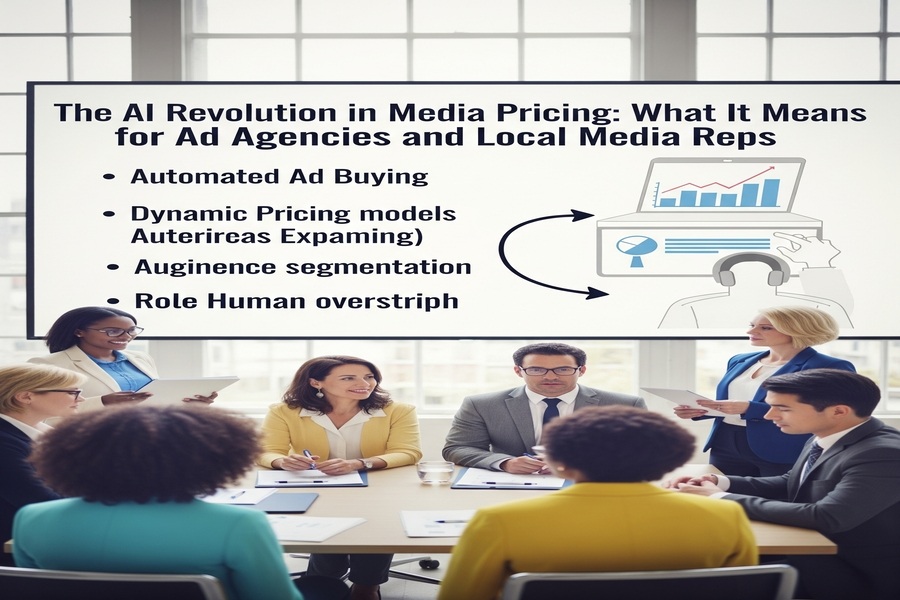
The AI Revolution in Media Pricing: What It Means for Ad Agencies and Local Media Reps
Executive Summary
AI is transforming media pricing by enabling real-time, data-driven decisions that replace static rate cards with dynamic, audience-based models. This shift empowers ad agencies to plan smarter, more efficient campaigns while offering local media reps tools to personalize pricing, speed up sales cycles, and prove ROI. While it reduces manual negotiation, it increases transparency and performance forecasting. Embracing AI in pricing is no longer optional—it’s a competitive advantage for those who adapt quickly.

Mastering Body Language in Media Sales: Advanced Techniques for Experienced Professionals
In media sales, your ability to build relationships, influence decision-makers, and close deals depends as much on how you communicate as what you say. While seasoned sales professionals understand the fundamentals of body language—eye contact, posture, and mirroring—true mastery involves recognizing the subtle cues that reveal client intent, controlling your own nonverbal signals, and using advanced techniques to create trust and urgency.

Questions/Answers, Engaging Customers In Verbal Ping-Pong
I listen to a lot of sales calls. Recordings of client sellers in calls/meetings. Sometimes webcasts where someone is talking about call strategies and going through role plays. This week, it was on creating urgency with questions. So much of it begins to look like a game of pint pong.

Mastering Chess Strategy and Sales Conversations: How Openings Win in Both Games
In the seventh grade, I learned to play chess. When I got to high school, I came across a book called Bobby Fischer Teaches Chess, and decided to study it. It was unusual. It gave you a chess puzzle to solve. To see how you did, you had to turn the book upside down to read Fischer’s notes and recommended strategy. I played all summer and got better and better, beating my freshman peers easily. The seniors, however, were able to beat any and all freshmen.

My Upcoming Sales Training Courses for Negotiation, KPIs, AI, and Sales Management Templates
Over the last few weeks, I’ve developed three top-tier, comprehensive courses. These aren’t the typical courses you see that skim the surface. These are thorough, deep-dive, results-driven courses designed to drive sales performance. And while we put the finishing touches on these, I’m crafting a fourth course that’s built around a powerhouse collection of templates I use in my own business. This one will take time, but when it’s ready, it will be the ultimate playbook for sales leaders, equipping them to empower their teams to hit ambitious targets.

How You are Perceived
One of the biggest mistakes that salespeople make is leading with their product. To understand why, you need to be aware of the four levels of value. We talk about four levels of value creation. Each level contains the ones lower levels, and transcends them to create even greater value. As you move up through the levels, you are a better salesperson and can better meet your clients’ needs. Once you reach level 4, you can differentiate yourself, gaining the ultimate competitive advantage.

Turning ‘Mini-Contracts’ Into Big Orders
Our presentations to our clients should be DIALOGUES not MONOLOGUES. Far too often, we ask for money by spouting all we know about our stations and our advertising in general. We talk about us, us, us instead of them, them, them. Turning monologues into dialogues is not difficult. We can begin the path to “Yes” by getting small agreements throughout our presentation. We get these “mini-contracts” by using “check-in” questions. Here are some examples:

10 Ways to Avoid Being a Dull Salesperson and Engage Your Clients Effectively
Too many sales reps are dull in their sales conversation. You can blame this on onboarding processes that gaslight reps into believing that their company and solution are the most important things. This establishes parity with competitors, meaning one salesperson is no better than another. Instead of being average and turning yourself into a commodity, aim to be a more dynamic, engaging salesperson.
![How to Write a Business Proposal [Examples + Template]](https://mi.rutal.net/uploads/posts/2025/2025-06-05_260.jpg)
How to Write a Business Proposal [Examples + Template]
A business proposal can bridge the gap between you and potential clients. Done correctly, it will outline your value proposition and persuade a company or organization to do business with you. Here, we’ll take a look at the various kinds of business proposals and go over how to write one. We’ll also see some ideas and examples to help guide yours.

Maximize Your Sales Success: The Power of Reading, Writing, and Speaking in B2B Sales
I am never without a book, whether it’s a hardcover or an audiobook. If I’m doing anything that allows me to listen to a book, you’ll find me with an audiobook. I used to buy books for my clients, only to see them collect dust, unopened and unread. Right now, the One-Up Book Club is on its second round. The first five books include Nate Silver’s On the Edge, How Migration Works by Hein de Haas, Overruled by Neil Gorsuch and Janie Nitze, Minds Wide Shut by Garry Saul Morson and Morton Schapiro, and Nexus by Yuval Noah Harari.