
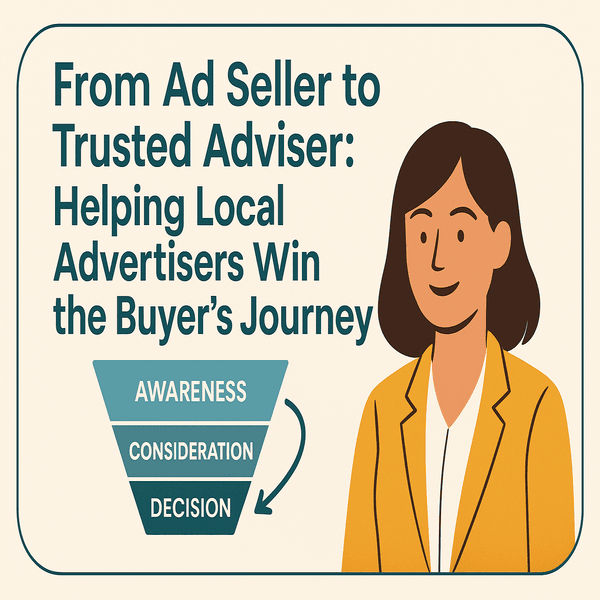
From Ad Seller to Trusted Adviser: Helping Local Advertisers Win the Buyer’s Journey
Today’s local media sales professionals — whether selling newspaper, magazine, TV, billboard, or digital — must go beyond selling ad space. As local businesses face a more complex customer landscape, success lies in understanding and educating clients on the full buyer’s journey. By aligning traditional and digital tactics across awareness, consideration, and decision stages, reps can elevate their value and become indispensable marketing partners. This strategic approach increases campaign effectiveness, boosts renewals, and turns one-off buys into long-term relationships.

David Ogilvy: The Father of Advertising
David Ogilvy, often called the “Father of Advertising,” revolutionized the industry with his belief that advertising should be both creative and rooted in research. He began his career as a door-to-door stove salesman and later worked in British intelligence before founding Ogilvy Mather at age 38. Ogilvy’s campaigns for brands like Rolls-Royce, Dove, and Hathaway Shirts became iconic for their storytelling and respect for the consumer. He was a pioneer in using data to inform creative decisions, famously stating, “If it doesn’t sell, it isn’t creative.” His legacy lives on as a model of how intellect, empathy, and discipline can build enduring brands.
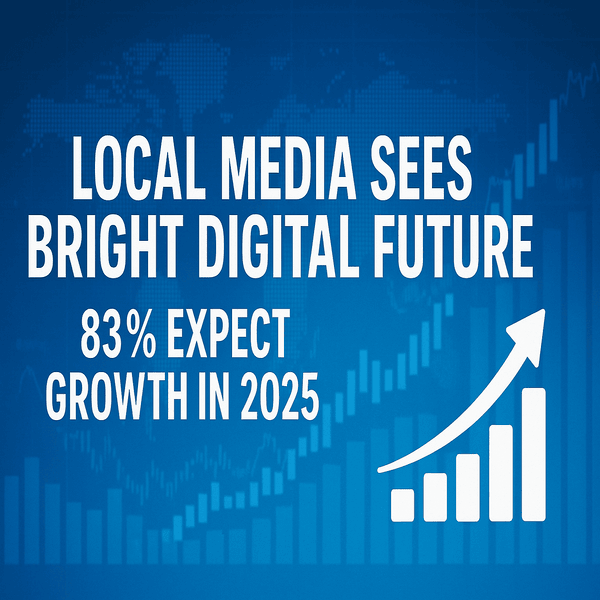
Local Media Sees Bright Digital Future: 83% Expect Growth in 2025
A new survey from the Local Media Consortium finds that 83% of local media professionals expect digital revenue to grow or remain steady in 2025, with gains driven by video, subscriptions, and newsletters. While some challenges persist—particularly around digital ad revenue and staffing—AI adoption, cross-platform content strategies, and audience engagement are gaining ground. These trends provide a strong foundation for media sellers to deliver smarter, more tailored solutions to local advertisers. The data underscores the continued relevance and revenue potential of trusted local media in a fragmented digital landscape.
Programmatic Progress: What Local Media Sellers Need to Know in 2025
The programmatic advertising landscape is evolving in ways that benefit premium, trusted media sellers. A Q1 2025 ANA study reports that effective impressions are rising and low-quality ad placements are sharply declining. However, inefficiencies like optimization gaps and data compliance concerns remain. For local media—TV, print, digital, out-of-home—this presents both a challenge and a powerful opportunity to highlight the unique value of trusted, local ad environments.
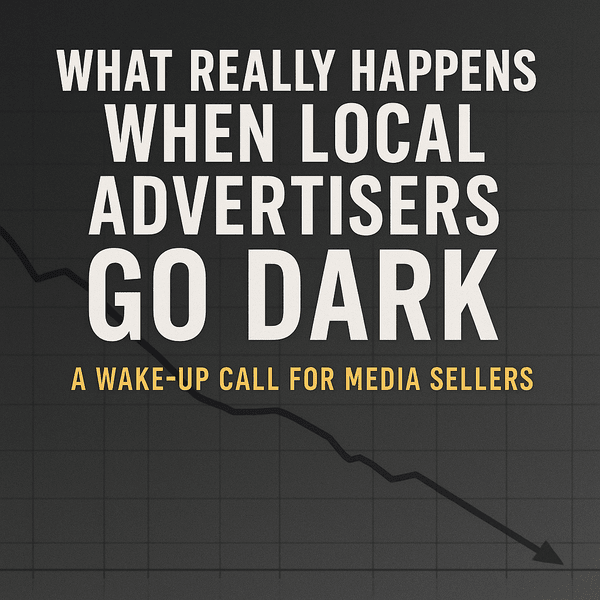
What Really Happens When Local Advertisers Go Dark: A Wake-Up Call for Media Sellers
When brands cut advertising, the immediate savings can look good — but the long-term damage can be devastating. Two major brands that slashed their ad budgets across channels like TV, print, digital, and search saw short-term efficiency gains quickly followed by steep declines in revenue, profits, and customer acquisition. Even when they returned to spending, rebuilding was slow and expensive, with much higher costs per acquisition than before. For local media sales professionals, this case study reinforces the value of maintaining consistent ad presence — and the critical role media reps play in helping advertisers understand the long-term consequences of pulling back.
Media Costs Stabilize - What Slower Inflation Means for Local Advertising in 2025
As media inflation cools across the U.S., local media sellers mdash;across newspapers, magazines, billboards, TV, and digital mdash;are entering 2025 with a more stable pricing environment. The latest ECI Media Inflation Report projects just a 2.5% increase in media costs, with radio ad rates rising only 1% and digital video (CTV) seeing continued price declines. For local media sellers, this presents a key opportunity: while national and global uncertainties persist, local advertisers may find more room to buy and plan confidently. Stability in pricing can help unlock conversations with cautious advertisers, especially in sectors pressured by tariffs and consumer belt-tightening.
Clipping Is Quietly Transforming Advertising — Here's What Local Media Sellers Need to Know
Clipping mdash; the practice of sharing short video segments from longer content across social platforms mdash; is emerging as a stealthy but effective advertising strategy. Initially driven by influencers, this tactic is now attracting major brand dollars, offering new revenue opportunities for local media outlets. While still flying under the radar of regulatory oversight, clipping offers a model of snackable, high-engagement content that local newspapers, magazines, TV stations, and digital sellers can learn from or even leverage. Local media sellers must consider how to integrate or compete with this trend as advertisers look for fast, viral exposure over traditional placements.
Unlocking Local Media Growth: INMA’s New Roadmap for Navigating the Digital Ad Landscape
The International News Media Association (INMA) has launched a new initiative designed to help media organizations mdash;including local newspapers, magazines, radio, TV, billboards, and digital publishers mdash;navigate the increasingly complex digital advertising world. Spearheaded by industry veteran Gabriel Dorosz, the initiative offers practical guidance on data use, ad innovation, cross-platform strategies, and leveraging AI for better monetization. Through webinars, reports, and live sessions, INMA aims to equip local media sales teams with the knowledge and tools they need to stay competitive and profitable. As digital now commands 75% of global ad spend, this effort is timely and vital for salespeople aiming to evolve their strategies and grow their revenue.
Adapting to the Digital Shift: How Local Media Sales Teams Can Thrive in 2025
In 2025, local media salespeople in newspapers, magazines, billboards, and TV face growing competition from digital platforms like Google and Meta, necessitating innovative sales strategies. By leveraging industry trends, co-op advertising opportunities (available from MarketingInsights.Info) and tailored presentations, sales teams can emphasize their media rsquo;s unique strengths to drive revenue. This article explores actionable strategies to help local media sales professionals adapt and succeed in an evolving advertising landscape.
From Selling Ads to Driving Growth: A Smarter Strategy for Local Media Sales Teams
Too often, local media salespeople mdash;across newspapers, magazines, billboards, TV, and digital mdash;only enter the conversation once an advertiser has already finalized their product, audience, media mix, and message. At that point, there #39;s little room for real influence. To stay relevant and valuable in today rsquo;s complex marketing landscape, local sellers need to shift from selling media products to helping clients achieve business growth. By focusing on client outcomes instead of ad inventory, media sellers can reclaim their seat at the table and build deeper, longer-lasting partnerships.
New Local Businesses Are Fueling a Traditional Media Revival: Are You Ready?
A new report from Borrell Associates reveals that recently established local businesses are breathing new life into traditional media mdash;including radio, TV, print, billboards, and direct mail mdash;with a notable increase in ad spending. Radio leads the way with an average advertiser spend of $48,060, topping even television. The growth in small business formation post-pandemic has created an influx of new advertisers who often favor traditional media channels for their perceived effectiveness and hands-on support. This shift signals a vital opportunity for local media sales reps to reconnect with Main Street and capture growing budgets from newer, often underserved advertisers.
Cracking the Perception Gap: What Local Media Sellers Can Learn from Radio’s Ad Challenges
Despite radio rsquo;s strong audience reach and cost-efficiency, major misperceptions among advertisers are causing significant underinvestment in the medium. These challenges mdash;and how the Radio Advertising Bureau (RAB) is addressing them mdash;offer critical insights for all local media sellers, including newspapers, billboards, TV, magazines, and digital. Like radio, these platforms often face outdated assumptions that affect their share of ad budgets. This article outlines key data, strategies, and messaging that local sellers can adopt to better position their value in today rsquo;s competitive media mix.
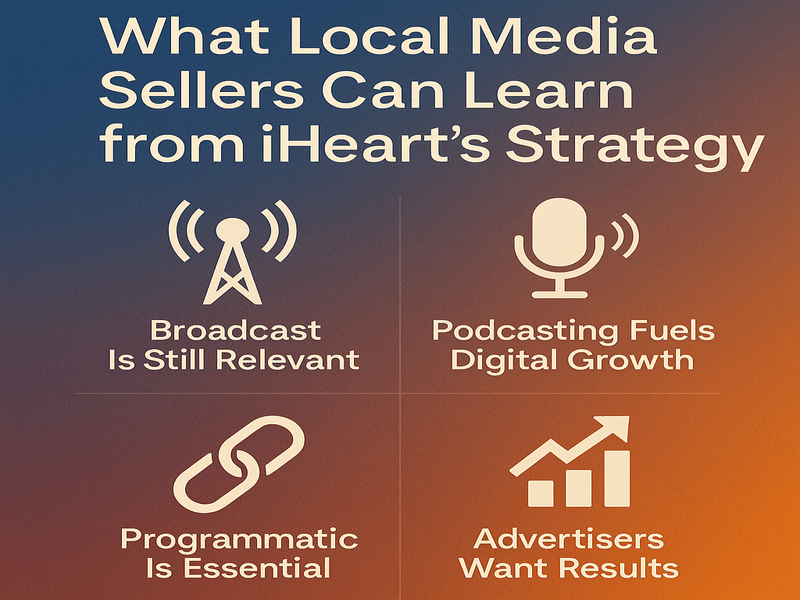
How iHeart’s Growth Strategy Signals Key Trends for All Local Media Sellers
iHeartMedia rsquo;s latest earnings report offers an encouraging look at how legacy media companies can successfully adapt to the evolving advertising landscape. While digital remains the fastest-growing division mdash;led by podcasting mdash;there are signs of stabilization and renewed momentum in broadcast radio, particularly in national network sales. The company rsquo;s focus on ad tech, programmatic inventory, AI-driven efficiencies, and integrated media sales serves as a useful playbook for local sellers across all media. For newspapers, magazines, TV, digital platforms, and billboards, the big takeaway is clear: advertisers want multiplatform solutions, measurable performance, and efficient reach mdash;and media companies who deliver those will win.

Boosting Sales Through Fitness: The Power of Regular Exercise
Regular exercise is a game-changer for local salespeople, enhancing productivity, mental resilience, and overall well-being. Physical activity improves cognitive function, boosts energy levels, and reduces stress, leading to better performance in sales tasks. By incorporating fitness into your daily routine, sales professionals can manage time more effectively and build confidence. This story explores the profound impact of regular exercise on sales productivity, backed by research and expert insights.
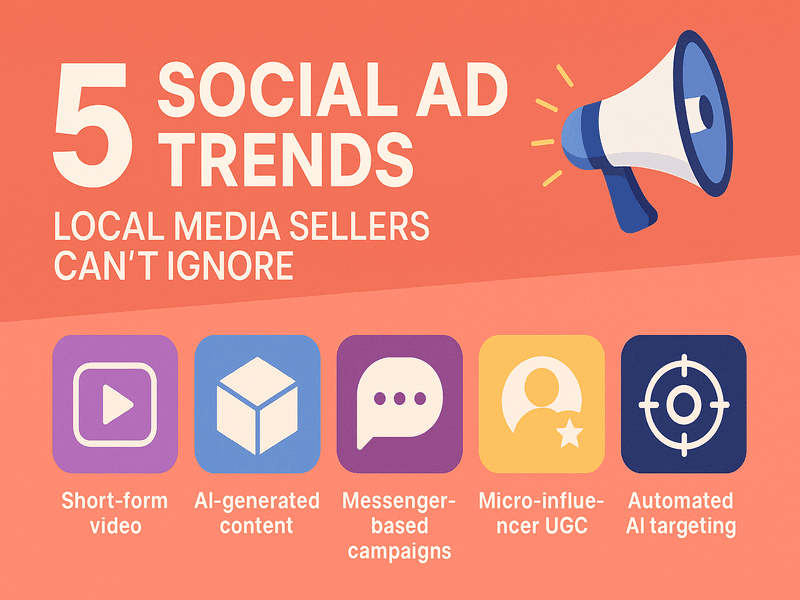
5 Social Ad Trends - Local Media Sellers Can’t Ignore
PPC advertising is surging in popularity thanks to its scalability and fast turnaround. Adrian Falk outlines five key trends reshaping social advertising: short-form video, AI-generated content, Messenger-based campaigns, micro-influencer UGC, and automated AI targeting. For local media sales teams, these shifts highlight new opportunities to integrate digital tactics into traditional campaigns and drive better results for small and mid-size advertisers. Embracing these trends can position local media as savvy digital partners mdash;not just legacy platforms.