
The Psychology of Weather: Unlocking Local Advertising Power
What if meteorologists and marketing strategists had more in common than just the forecast? According to recent research from The Weather Company and neuroanalytics outfit Neuro-Insight, weather does more than set people’s moods — it alters how people remember, engage with, and act upon brand messages. For local media sales teams and advertising agencies, the implications are clear: weather is not just background noise. It can be a powerful lever to improve campaign performance and return on investment.
Weather as a Contextual Signal
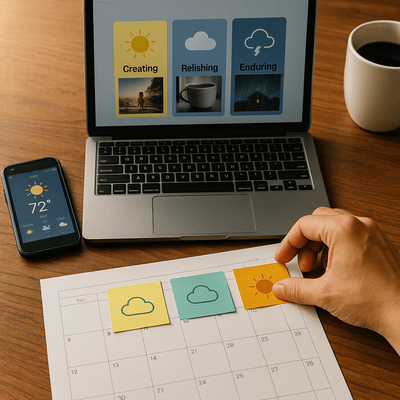
The study, titled “Wired for Weather,” finds that weather conditions create distinct weather mindsets that systematically affect four brain functions considered critical in marketing: detail memory (ability to recall specific details), global memory (overall retention of what a message felt like), engagement, and emotional response. Adweek
These mindsets fall into three main categories:
- Creating (sunny, warm, pleasant weather, mild wind) – Optimism, openness to new experiences and spontaneity. Detail memory and engagement are especially high; people are more impulsive. Adweek
- Relishing (cloudy, neutral weather) – Introspection, slower pace, browsing. Less urgency but strong absorption of details; people linger, take in more. Adweek
- Enduring (stormy, cold, inclement) – People seek comfort and familiarity. Emotional intensity is elevated; stability and support are valued over novelty. Adweek
Furthermore, when campaigns are aligned with the prevailing weather mindset, marketers can see an ROI lift of 10% or more. Adweek
Why Local Media Agencies Should Care
Local media outlets (newspapers, radio, local TV, online news sites) and agencies servicing local or regional clients are especially well positioned to use these insights. Here's how:
- Geographic Precision — Local media already know their coverage area intimately, often down to ZIP codes. Since weather is geographically specific, local sellers can match ad timing and creative to localized forecasts.
- Frequent Weather Variation — Smaller, more local markets often experience rapid changes (e.g., a storm system moving through, weather fronts). That provides more “weather momentum” to exploit than in regions with very stable climates.
- Relevance to Local Consumer Behavior — Local buying decisions are influenced by what’s going on around consumers right now: temperature, commute conditions, wind, precipitation. These affect foot traffic, in-store behavior, decision to dine out, etc. Knowing the mindset helps in advising local advertisers more precisely.
- Creative Flexibility Local Flavor — Local media + local advertisers can co-create messaging that ties directly into local weather phenomena, cultural rhythms (e.g., mild fall afternoons, snowstorms, monsoon rains) in ways that national campaigns may not.
- Inventory Management Pricing — Since attention, engagement, and conversion vary with mindset, premium ad slots (e.g., digital display, time-of-day, high-visibility placements) during weather conditions of high “Creating” or “Enduring” value could be sold at higher rates.
Some of the more startling quantitative findings from the study:
- Under “Creating” conditions, campaigns that match the mindset see about a 10% increase in purchase intent. Detail memory rises; consumers are 3× more positive and excited; over 2× happier on sunny days than rainy ones. Adweek
- In the Relishing mindset, though consumers are less likely to make spontaneous purchases, there is a strong increase in detail memory when brands use contrast—for example, visuals that stand out against the dull skies. That can lead to stronger long-term brand building. Adweek
- Under Enduring conditions—stormy, cold, or snowy—the emotional centers of the brain are particularly active, detail memory can increase by ~22%, and purchase intent by over 18% when messaging is comforting, nostalgic, empathetic or supportive. Adweek
For local media sellers and agency professionals, these findings translate into several actionable strategies.
1. Real-Time Weather-Triggered Campaign Planning
- Dynamic scheduling. Use weather forecasts to schedule ad creative changes. For example, when a stretch of sunny weather is predicted, push creative that leans into the Creating mindset—outdoor lifestyle, discovery, trial, novelty.
- Weather-based promotions. Local businesses (restaurants, retailers, gyms, etc.) could run promotions triggered by weather (e.g., “Sunny Day Specials,” “When snow hits, hot drink deals,” etc.). If promotion messaging aligns with mindset, conversion improves.
- When weather is bright and warm: use bright color palettes, aspirational visuals, messaging about exploration and new experiences.
- In overcast / neutral weather: contrast becomes valuable. Messaging that breaks the mood—vivid visuals, unexpected messaging, or strong calls-to-action.
- In inclement or stormy weather: lean into narratives of comfort, nostalgia. Offer emotional refuge: warm visuals, cozy settings, supportive messaging. Brands that show up with empathy/resilience will earn loyalty.
- Local digital inventory can be dynamically allocated. For example: mobile display, social, connected TV placements in areas experiencing weather conditions favorable to certain mindsets.
- Local out-of-home media: timing matters. If foot traffic tends to drop in storms, but stays high during pleasant weather afternoons, schedule high-impact OOH or experiential campaigns accordingly.
- Local media sales teams might build into their pitches the idea that certain weather conditions enhance ad effectiveness significantly—this supports premium rate during these windows ("weather-mindset premium").
- For agencies: include weather-mindset alignment as a metric or feature in proposals. Being able to say: “We’ll adapt creative to weather forecasts to lift purchase intent by 10-20%” can differentiate your offering.
- Track performance of campaigns during differing weather mindsets. For example, compare KPIs (CTR, conversion, foot traffic, in-store sales) for ad sets launched in Creating mindset vs Relishing.
- Use available weather data (many public sources, plus private providers) to tag campaign data with weather variables (temperature, cloud cover, precipitation).
- Build experiments: isolate the effect of creative aligned vs misaligned with weather. That helps build proof for your clients or internal teams.
While the opportunities are significant, there are constraints and caveats local media and agencies must keep in mind:
- Forecast accuracy lead time. Weather forecasts aren't perfect. Crafting creative takes time; turning campaigns on/off or changing creative must consider operational lag.
- Creative production costs. Having multiple creative assets in reserve (weather-aligned versions) imposes extra cost. For local advertisers with tight budgets, trade-offs will be needed.
- Weather attribution vs other factors. Many things influence consumer behavior: promotions, holidays, local events, seasonality. Weather is one among many. Attribution must try to control for confounding variables.
- Overuse risk. If every brand pivots heavily depending on weather, consumers may become desensitized—especially for obvious weather references. The creative alignment must feel authentic, not opportunistic.
To illustrate, consider a mid-sized city radio station with digital and billboards, plus an agency client that runs a chain of cafés, local gyms, and a clothing boutique.
- On forecasted sunny weekends, the radio station sells “Creating mindset packages” including high-visibility display banners promoting discovery (new menu items, trial fitness passes) timed for Friday afternoons. The clothing boutique runs “Fresh-Start Fashion” ads that coincide with the warm weather, emphasizing new looks, color, outdoor style.
- When steady overcast or neutral days are predicted midweek, the boutique pivots to creative that contrasts with the weather—bright visuals, clear calls-to-action—and also promotes cozy in-store experiences (e.g. “Stay Dry, Shop Inside”). The café markets mid-week specials with comforting visuals.
- During incoming rainstorms or cold fronts, the campaign focuses on messaging around warmth: “Warm Drink Deals,” “Cozy Up Coupons,” “Stay-in Style Apparel,” etc. Also, digital campaigns may be scheduled so that ads appear when people are likely indoors (evenings) to maximize attention.
What Local Media Agency Pros Should Do Now
- Audit your creative inventory. Do you already have multiple versions of ads that could align with different weather mindsets? If not, begin building flexible templates.
- Get weather data hooked up. Either through APIs or partnerships (private or public weather services) so you can tag and trigger campaigns according to weather forecasts.
- Train the sales teams. Equip local media sellers with talking points around weather mindsets. Being able to explain to clients the neuroscience and ROI potential gives credibility.
- Develop case studies. Try pilot projects in your market. For example, run identical creative vs weather-aligned creative during different weather conditions; measure and publish results internally or with clients.
- Integrate with digital and outdoor. Weather-mindset marketing works across media types. Local digital, programmatic, social, OOH, and indoor media can all take advantage, if timed and designed properly.
Weather has long been a spectator’s interest; now it’s becoming a marketer’s lever. For local media outlets and advertising agencies, the storm of opportunity is real: embracing weather-mindset marketing can sharpen targeting, bolster creative relevance, and improve ROI. In a competitive local advertising market, firms that can harness not just what the forecast is—but how people feel when that forecast arrives—may well be the ones to rise above.
Source: https://www.adweek.com/sponsored/humans-are-wired-for-weather-the-power-of-mindset-marketing/?itm_source=site itm_medium=HP itm_campaign=b
.png)